 ChipApex | Global Electronic Components Supplier
SEARCH
Search Product
Search Post
— IC芯片 | 连接器 | 传感器 | 被动器件 —
Search productSearch post
— IC芯片 | 连接器 | 传感器 | 被动器件 —
Consult the customer manager about the wholesale price.
consultation hotline:86-132-6715-2157
email:[email protected]
Contact the product manager for consultation. One-stop consultation is available.
Do you want a lower wholesale price? Please send us your inquiry and we will reply immediately.
The ADM1025AARQZ is a system hardware monitor ASIC manufactured by onsemi, housed in a 16-lead QSOP package. It operates within a supply voltage range of 3.0 V to 5.5 V with a typical active current of 2.5 mA and standby current of 500 μA. The device features an I²C compatible SMBus interface with a clock frequency up to 400 kHz. It provides five analog voltage inputs for monitoring 2.5 V, 3.3 V, 5 V, 12 V, and processor core voltages, alongside internal VCC monitoring. Temperature sensing includes an on-chip sensor with ±3 °C accuracy and a remote diode input with ±5 °C accuracy. The ADC resolution is 8 bits, with conversion times of 11.6 ms for analog/internal temperature and 34.8 ms for external temperature.
Verify component authenticity through authorized distribution channels or direct manufacturer engagement. Confirm the specific ordering suffix matches the required package and tape/reel specifications. Ensure compliance with RoHS directives and check for any product change notifications that may affect pin compatibility or electrical characteristics prior to finalizing procurement orders.
Select the ADM1025A variant when open-drain VID inputs are required, as opposed to the pull-up version. Ensure the system design accommodates the 16-lead QSOP thermal dissipation requirements. Verify that the target application supports the I²C/SMBus protocol timing constraints. Consider the sequential measurement cycle time when designing real-time monitoring loops for critical voltage rails.
This component belongs to the ADM1025 family of low-cost PC hardware monitors produced by onsemi (formerly SCILLC). It serves as a comprehensive solution for tracking power supply integrity and thermal conditions in microprocessor-based systems. The device integrates analog-to-digital conversion and serial communication interfaces into a single compact package, reducing the need for external monitoring components.
Publicly confirmed substitute part numbers are not available in the provided documentation. Evaluate alternative hardware monitors from the same manufacturer only if they maintain pin compatibility and identical SMBus addressing schemes. Verify that replacement devices support the same VID input configurations and voltage ranges before implementation.
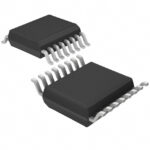 ADM1025AARQZ
The activity of extra discounts on wholesale prices is in full swing…
Please fill in your contact information and we will send you the latest wholesale price list.






