 ChipApex | Global Electronic Components Supplier
SEARCH
Search Product
Search Post
— IC芯片 | 连接器 | 传感器 | 被动器件 —
Search productSearch post
— IC芯片 | 连接器 | 传感器 | 被动器件 —
Consult the customer manager about the wholesale price.
consultation hotline:86-132-6715-2157
email:[email protected]
Contact the product manager for consultation. One-stop consultation is available.
Do you want a lower wholesale price? Please send us your inquiry and we will reply immediately.
The ADM1026JSTZ-R7 is a complete system hardware monitor for microprocessor-based systems, providing measurement and limit comparison of various system parameters. It features up to 19 analog measurement channels, including dedicated inputs for +3.3 V, +5 V, ±12 V power supplies, and processor core voltage. The device includes an on-chip temperature sensor with ±3 °C accuracy and supports remote diode temperature sensing. It offers up to 8 fan speed measurement channels and provides both analog (DAC) and PWM fan speed control outputs. Communication is handled via a 2-wire serial system management bus (SMBus) with full SMBus 1.1 support, including packet error checking.
Verify the specific ordering suffix R7 confirms the reel packaging format required for automated assembly processes. Ensure the JSTZ designation aligns with the lead-free and RoHS compliance standards mandated by your manufacturing facility. Confirm that the 48-lead LQFP package dimensions match your printed circuit board layout constraints before finalizing procurement orders.
Select this component when designing systems requiring extensive voltage monitoring across standard server rails alongside precise thermal management. The inclusion of dual remote temperature inputs allows for accurate monitoring of critical processor or heatsink locations. Consider the available general-purpose I/O pins if additional digital control signals are needed within the same footprint.
This component belongs to the ADM1026 family of hardware monitors originally developed by SCILLC and later acquired by ON Semiconductor. These devices are engineered to replace discrete monitoring circuits, reducing bill-of-materials complexity. The series is widely utilized in computing infrastructure where reliable system health tracking is essential for operational stability and maintenance.
Direct pin-to-pin replacements may include other ADM1026 variants with different packaging options such as TQFP. Verify register compatibility if substituting with older revisions, as software drivers may require updates to accommodate minor functional differences between production batches.
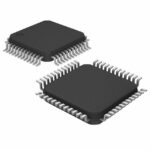 ADM1026JSTZ-R7
The activity of extra discounts on wholesale prices is in full swing…
Please fill in your contact information and we will send you the latest wholesale price list.





