 ChipApex | Global Electronic Components Supplier
SEARCH
Search Product
Search Post
— IC芯片 | 连接器 | 传感器 | 被动器件 —
Search productSearch post
— IC芯片 | 连接器 | 传感器 | 被动器件 —
Consult the customer manager about the wholesale price.
consultation hotline:86-132-6715-2157
email:[email protected]
Contact the product manager for consultation. One-stop consultation is available.
Do you want a lower wholesale price? Please send us your inquiry and we will reply immediately.
The ADM1075-2ARUZ-RL7 is a negative voltage hot swap controller designed for safe insertion and removal of boards from live backplanes. It operates with input voltages typically ranging from -35 V to -80 V, utilizing an internal shunt regulator for robust transient immunity. The device features constant power foldback for FET SOA protection and provides precision current and voltage measurement with accuracy better than 1.0%. It supports PMBus/I2C interfaces for telemetry and fault recording, ensuring comprehensive power management in high availability systems.
Verify the specific suffix and package configuration against official Analog Devices documentation before procurement. Confirm availability status as distribution channels may list limited stock or end-of-life statuses. Ensure compatibility with existing board designs regarding thermal requirements and interface protocols. Cross-reference ordering information with manufacturer datasheets to avoid substitution errors.
Select this component for applications requiring negative voltage hot swap capabilities with high accuracy monitoring. Consider the internal shunt regulator benefits for systems experiencing significant voltage transients. Evaluate the PMBus/I2C interface requirements for integration into existing telemetry architectures. Assess thermal performance within the specified junction temperature range during design validation.
This part belongs to the ADM1075 family of hot swap controllers manufactured by Analog Devices Inc. It is specifically engineered for managing negative supply voltages in critical infrastructure. The device integrates advanced protection features and digital monitoring capabilities, distinguishing it from standard load switches by offering detailed fault recording and programmable limits via digital interfaces.
Consult official Analog Devices documentation for verified substitute part numbers. Ensure any replacement maintains compatibility with -35 V to -80 V operating ranges and PMBus/I2C interfaces. Verify pinout and package dimensions match the original TSSOP or LFCSP form factor. Confirm that thermal and electrical specifications meet or exceed the original design requirements.
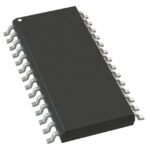 ADM1075-2ARUZ-RL7
The activity of extra discounts on wholesale prices is in full swing…
Please fill in your contact information and we will send you the latest wholesale price list.





