 ChipApex | Global Electronic Components Supplier
SEARCH
Search Product
Search Post
— IC芯片 | 连接器 | 传感器 | 被动器件 —
Search productSearch post
— IC芯片 | 连接器 | 传感器 | 被动器件 —
Consult the customer manager about the wholesale price.
consultation hotline:86-132-6715-2157
email:[email protected]
Contact the product manager for consultation. One-stop consultation is available.
Do you want a lower wholesale price? Please send us your inquiry and we will reply immediately.
The ADM242ARZ-REEL is a high-speed RS-232 transceiver manufactured by Analog Devices Inc. It operates from a single 5 V power supply and supports transmission rates up to 200 kB/s. The device integrates two drivers and two receivers with on-board DC-DC converters that generate ±10 V using small 0.1 µF external capacitors. It features both shutdown (SHDN) and enable (EN) functions for power management and bus sharing. The component meets EIA-232-E and V.28 specifications, offers ±9 V output swing, and accepts ±30 V receiver input levels. It is housed in an 18-lead wide SOIC package.
Verify the specific ordering suffix REEL against the manufacturer's current documentation to confirm packaging details. Ensure the component matches the required industrial temperature range of -40°C to +85°C. Confirm RoHS compliance status as indicated by the Z suffix in the base part number. Cross-reference pin configurations with existing designs to account for the 18-lead wide SOIC footprint.
Select this component when a single 5 V supply operation is required alongside RS-232 interface capabilities. The integrated shutdown and enable pins make it suitable for systems requiring low standby power or multi-drop bus configurations. Verify that the 200 kB/s data rate meets system requirements. Ensure the design accommodates four 0.1 µF external capacitors for the internal charge pump circuitry.
The ADM242ARZ-REEL belongs to the ADM222/ADM232A/ADM242 family of high-speed CMOS RS-232 drivers and receivers. This series utilizes BiCMOS technology to combine low power consumption with high-speed performance. The ADM242 variant specifically distinguishes itself by offering both shutdown and enable functionalities, providing greater control over power states and bus arbitration compared to its siblings.
The ADM222 and ADM232A are pin-compatible alternatives within the same family. The ADM222 lacks the enable pin but includes shutdown functionality. The ADM232A does not include either shutdown or enable pins. Verify functional requirements before substituting, as the absence of control pins may impact power management or bus sharing capabilities.
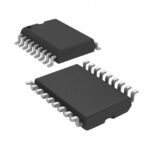 ADM242AR-REEL
The activity of extra discounts on wholesale prices is in full swing…
Please fill in your contact information and we will send you the latest wholesale price list.






