 ChipApex | Global Electronic Components Supplier
ADN2891ACPZ-RL
Search Product
Search Post
— IC芯片 | 连接器 | 传感器 | 被动器件 —
Search productSearch post
— IC芯片 | 连接器 | 传感器 | 被动器件 —
Consult the customer manager about the wholesale price.
consultation hotline:86-132-6715-2157
email:[email protected]
Contact the product manager for consultation. One-stop consultation is available.
Do you want a lower wholesale price? Please send us your inquiry and we will reply immediately.
The ADN2891ACPZ-RL is a 3.3 V, 3.2 Gbps limiting amplifier featuring integrated loss-of-signal detection and received signal strength indication. It offers 4 mV p-p input sensitivity with 80 ps rise/fall times and 700 mV p-p differential CML outputs. The device operates on a single supply with 145 mW power dissipation in a compact 3 mm × 3 mm, 16-lead LFCSP package. It supports an extended temperature range from −40°C to +95°C and includes programmable LOS thresholds for robust optical receiver applications.
Verify the specific ordering suffix against the manufacturer's current data sheet to ensure correct packaging quantity and RoHS compliance status. Confirm that the CP-16-27 package option matches the required footprint for PCB layout. Cross-reference the revision history to validate any updates to electrical specifications or pin configurations prior to final procurement.
Select this component for high-speed optical interfaces requiring precise signal quantization and built-in monitoring capabilities. The integrated RSSI functionality simplifies design by eliminating external monitoring circuits. Ensure the application utilizes a single 3.3 V supply and accommodates the specified thermal resistance requirements for the LFCSP package during operation.
This part belongs to Analog Devices' family of high-speed limiting amplifiers designed for optoelectronic conversion. It complements other transceiver components by providing signal conditioning and diagnostic features. The ADN2891 is specifically optimized for SONET, Ethernet, and Fibre Channel standards, serving as a critical interface between photodiodes and digital logic.
Consult the official Analog Devices ordering guide for verified substitute part numbers. Consider variants such as ADN2891ACPZ-500RL7 or ADN2891ACPZ-RL7 if different reel quantities are required. Verify that any alternative maintains identical pinout, voltage ratings, and performance characteristics.
The LOS threshold is set by connecting a resistor between the THRADJ pin and VEE, allowing programmable levels from 3.5 mV to 35 mV.
These pins allow connection of an external capacitor for input offset correction, which helps compensate for dc offsets in the signal path.
The on-chip RSSI monitors the bias current through a photodiode, providing an output current proportional to the average received power for SFF-8472 compliance.
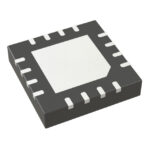 ADN2891ACPZ-RL
The activity of extra discounts on wholesale prices is in full swing…
Please fill in your contact information and we will send you the latest wholesale price list.