 ChipApex | Global Electronic Components Supplier
SEARCH
Search Product
Search Post
— IC芯片 | 连接器 | 传感器 | 被动器件 —
Search productSearch post
— IC芯片 | 连接器 | 传感器 | 被动器件 —
Consult the customer manager about the wholesale price.
consultation hotline:86-132-6715-2157
email:[email protected]
Contact the product manager for consultation. One-stop consultation is available.
Do you want a lower wholesale price? Please send us your inquiry and we will reply immediately.
The ADN4622BRNZ-RL is a quad-channel digital isolator manufactured by Analog Devices Inc., designed for high-speed data transmission. It features a 2+2 channel configuration supporting LVDS signals at data rates up to 2.5 Gb/s, providing a total bandwidth of 10 Gbps across all channels. The device operates with supply voltages ranging from 1.7 V to 1.9 V and 3 V to 3.6 V, consuming typical operating currents between 95 mA and 140 mA depending on the specific voltage rail. It offers a typical propagation delay of 2.15 ns with rise and fall times of 180 ps. The isolator provides an insulation voltage of 5700 Vrms and complies with TIA/EIA-644-A LVDS signal levels. It is housed in a 28-lead wide-body SOIC package (SOIC_W_FP) with finer pitch, ensuring 8.3 mm creepage and clearance distances.
Verify component authenticity through authorized distributors or direct manufacturer channels due to limited availability status. Confirm RoHS compliance details and specific packaging options such as reel or cut tape formats prior to ordering. Ensure that the procurement process accounts for potential supply constraints associated with this part number.
Select this component when designing systems requiring quad-channel LVDS isolation with high data throughput. Consider the 28-lead SOIC package dimensions for PCB layout compatibility. Evaluate power consumption requirements against the specified current ranges for both voltage rails. Ensure thermal management strategies align with the maximum power dissipation capabilities under intended operating conditions.
This part belongs to the ADN4622 series of gigabit isolators from Analog Devices. It shares functional similarities with other members like the ADN4624 but differs in channel configuration. The series is characterized by its ability to handle high-speed digital signals while maintaining strict isolation standards. It serves as a critical interface component in modern electronic designs demanding reliable data transfer across isolated domains.
Public confirmed substitute part numbers are not available in the provided documentation. Designers should consult official Analog Devices resources for compatible alternatives if this specific part number becomes unavailable.
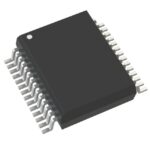 ADN4622BRNZ-RL
The activity of extra discounts on wholesale prices is in full swing…
Please fill in your contact information and we will send you the latest wholesale price list.






