 ChipApex | Global Electronic Components Supplier
SEARCH
Search Product
Search Post
— IC芯片 | 连接器 | 传感器 | 被动器件 —
Search productSearch post
— IC芯片 | 连接器 | 传感器 | 被动器件 —
Consult the customer manager about the wholesale price.
consultation hotline:86-132-6715-2157
email:[email protected]
Contact the product manager for consultation. One-stop consultation is available.
Do you want a lower wholesale price? Please send us your inquiry and we will reply immediately.
The ADN4624BCPZ is a quad-channel digital isolator from Analog Devices, designed for high-speed LVDS signal transmission. It operates at data rates up to 2.5 Gbps with a typical propagation delay of 2.15 ns and rise/fall times of 180 ps. The device provides 5700 Vrms isolation voltage per UL 1577 standards and supports supply voltages ranging from 1.7 V to 3.6 V. It features ±8 kV IEC 61000-4-2 ESD protection across the isolation barrier and a common-mode transient immunity of 100 kV/µs. Packaged in a 32-lead LFCSP, it functions within a temperature range of -40°C to +125°C.
Verify component authenticity through authorized Analog Devices distributors or certified partners. Confirm package marking matches ADN4624BCPZ and check datasheet revisions for specific lot traceability requirements. Ensure storage conditions comply with moisture sensitivity levels indicated on the label. Validate that the received units match the ordered configuration before integration into production lines.
Select this component when four independent LVDS channels are required within a single isolated boundary. It is suitable for designs needing high bandwidth up to 10 Gbps total across all channels. Consider the 32-lead LFCSP package for space-constrained PCB layouts. Ensure the application environment stays within the specified operating temperature range and supply voltage limits for optimal performance.
This part belongs to the ADN4624 series of gigabit isolators manufactured by Analog Devices. It is distinct from the ADN4622, which offers a 2+2 channel configuration instead of 4+0. The device utilizes capacitive coupling technology for signal transmission across the isolation barrier. It is part of Analog Devices' broader portfolio of interface and isolation integrated circuits designed for demanding industrial and communication applications.
The ADN4622BRNZ-RL is a related quad-channel variant but features a 2+2 channel configuration rather than 4+0. Verify pin compatibility and functional differences before substitution. No other direct cross-references are confirmed in public documentation.
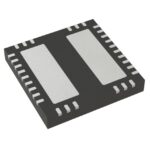 ADN4624BCPZ
The activity of extra discounts on wholesale prices is in full swing…
Please fill in your contact information and we will send you the latest wholesale price list.






