 ChipApex | Global Electronic Components Supplier
SEARCH
Search Product
Search Post
— IC芯片 | 连接器 | 传感器 | 被动器件 —
Search productSearch post
— IC芯片 | 连接器 | 传感器 | 被动器件 —
Consult the customer manager about the wholesale price.
consultation hotline:86-132-6715-2157
email:[email protected]
Contact the product manager for consultation. One-stop consultation is available.
Do you want a lower wholesale price? Please send us your inquiry and we will reply immediately.
The ADP5061ACBZ-5-R7 is a battery management integrated circuit designed for USB low-current charging applications. It supports lithium-ion batteries and operates within a supply voltage range of 4 V to 6.7 V. The device delivers an output current of 2.1 A with a regulated output voltage of 4.3 V. It is housed in a WLCSP-20 package suitable for surface mount installation. The component functions as a charge management IC within the ADP5061 series, operating reliably across a temperature range from -40 °C to +125 °C.
Verify the specific suffix designation against official Analog Devices documentation to confirm electrical characteristics and pinout compatibility. Ensure the procurement channel provides valid traceability and authenticity guarantees. Confirm that the WLCSP-20 packaging format meets your assembly requirements. Cross-reference the part number with the latest datasheet revision to ensure alignment with current manufacturing specifications.
Select this component when designing systems that require a dedicated linear charger for lithium-ion batteries powered via USB interfaces. The device is appropriate for applications needing a 2.1 A output capability within a small form factor. Consider the thermal performance and operating temperature range relative to the final enclosure design. Verify that the system input voltage remains within the 4 V to 6.7 V operational window for reliable function.
This part belongs to the ADP5061 series of power management ICs manufactured by Analog Devices. The series focuses on battery management solutions for portable devices. The ADP5061ACBZ-5-R7 variant specifically targets USB low-current charging scenarios. It shares the core family architecture but differs in specific output configurations compared to other suffixes in the lineup.
Consult official Analog Devices substitution guides for verified alternatives. Direct replacements must match the WLCSP-20 package and support similar lithium-ion charging parameters. Verify functional equivalence before implementation.
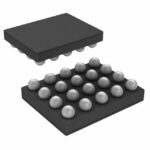 ADP5061ACBZ-5-R7
The activity of extra discounts on wholesale prices is in full swing…
Please fill in your contact information and we will send you the latest wholesale price list.





