 ChipApex | Global Electronic Components Supplier

SEARCH
Search Product
Search Post
— IC芯片 | 连接器 | 传感器 | 被动器件 —
Search productSearch post
— IC芯片 | 连接器 | 传感器 | 被动器件 —
Consult the customer manager about the wholesale price.
consultation hotline:86-132-6715-2157
email:[email protected]
Contact the product manager for consultation. One-stop consultation is available.
Do you want a lower wholesale price? Please send us your inquiry and we will reply immediately.
The ADP5588ACPZ-R7 is an I/O port expander and keypad matrix controller manufactured by Analog Devices Inc. It operates within a supply voltage range of 1.7 V to 3.0 V and communicates via an I2C interface with a maximum clock frequency of 400 kHz. The device provides 18 configurable GPIOs or supports a 10x8 keypad matrix (80 keys). It features open-drain interrupt outputs, programmable pull-ups, and two dedicated light sensor inputs on pins C8 and C9. The component is housed in a 24-lead LFCSP package measuring 4 mm x 4 mm and functions reliably across an operating temperature range of -40°C to +85°C.
Verify the specific ordering suffix R7 corresponds to the required reel packaging configuration. Confirm that the LFCSP-24 package dimensions align with the target PCB footprint. Ensure the I2C address settings do not conflict with other devices on the bus. Check RoHS compliance documentation for final assembly requirements.
Select this component when a single IC must handle both extensive keypad scanning and additional GPIO expansion. Verify that the system power supply remains within the 1.7 V to 3.0 V operational window. Consider the 400 kHz I2C speed limit for system timing constraints. Evaluate the need for the integrated debounce and FIFO features to reduce host processor load.
This part belongs to the ADP5588 series of mobile I/O expanders. It is distinct from LED drivers or voltage regulators due to its focus on input/output expansion and matrix scanning. The ACPZ-R7 designation indicates the specific commercial temperature grade and tape-and-reel packaging format provided by Analog Devices.
Publicly confirmed substitute part numbers are not available in the verified source material. Cross-reference pinouts and register maps if considering alternative I/O expanders from different manufacturers.
The device includes an overflow feature. When the 10-key FIFO is full, new events can either be discarded or cause the oldest data to be overwritten, depending on the OVR_FLOW_M bit setting in Register 0x01.
Pins C8 and C9 serve as column inputs for the keypad matrix but can also be configured as comparator inputs for external light sensors, requiring 0.1 μF capacitors when used in sensor mode.
Yes, GPIs can be configured to generate interrupts. The active level (high or low) is programmable, and these events can be tracked in the key event table if enabled.
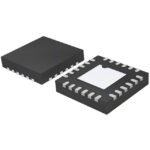 ADP5588ACPZ-R7

The activity of extra discounts on wholesale prices is in full swing…
Please fill in your contact information and we will send you the latest wholesale price list.





