 ChipApex | Global Electronic Components Supplier

SEARCH
Search Product
Search Post
— IC芯片 | 连接器 | 传感器 | 被动器件 —
Search productSearch post
— IC芯片 | 连接器 | 传感器 | 被动器件 —
Consult the customer manager about the wholesale price.
consultation hotline:86-132-6715-2157
email:[email protected]
Contact the product manager for consultation. One-stop consultation is available.
Do you want a lower wholesale price? Please send us your inquiry and we will reply immediately.
The ADUM1255AWA+T is a digital isolator featuring two open-drain channels, configured as one unidirectional and one bidirectional path. It operates within a supply voltage range of 2.25 V to 5.5 V with a typical operating current of 1 mA. The device provides galvanic isolation with an insulation voltage of 848 Vrms. Key timing parameters include a propagation delay of 128.4 ns, a maximum fall time of 64.7 ns, and pulse width distortion of 94.2 ns. It functions reliably across a temperature range of -40°C to +85°C and is housed in a WSOIC-8 surface-mount package.
Verify the specific suffix 'T' against the manufacturer's official documentation to confirm tape-and-reel packaging status, as standard listings may indicate tube packaging. Ensure the component matches the exact WSOIC-8 footprint and pinout configuration required by the design. Cross-reference the RoHS compliance details provided in the datasheet to meet environmental regulations. Confirm that the supplier source is authorized to prevent counterfeit components.
Select this component when a mixed-directional isolation solution is required within a single package. The open-drain output architecture necessitates external pull-up resistors, which allows flexibility in selecting the output voltage level independent of the supply rail. Consider the 128.4 ns propagation delay for timing-critical applications. The bidirectional capability simplifies designs involving shared data lines or interrupt signals across the isolation barrier.
This part belongs to the ADUM125x family of digital isolators from Analog Devices. These devices utilize iCoupler technology to provide robust isolation without the limitations of traditional optocouplers. The ADUM1255 variant specifically addresses applications needing asymmetric channel directionality, distinguishing it from fully bidirectional models like the ADUM1250 or fully unidirectional models like the ADUM1251.
ADUM1255ARZ-WM
No, the device does not feature a shutdown pin; it operates continuously once powered.
The maximum power dissipation is specified as 471 mW.
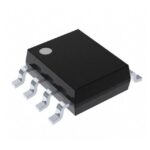 ADUM1255AWA+T

The activity of extra discounts on wholesale prices is in full swing…
Please fill in your contact information and we will send you the latest wholesale price list.





