 ChipApex | Global Electronic Components Supplier

SEARCH
Search Product
Search Post
— IC芯片 | 连接器 | 传感器 | 被动器件 —
Search productSearch post
— IC芯片 | 连接器 | 传感器 | 被动器件 —
Consult the customer manager about the wholesale price.
consultation hotline:86-132-6715-2157
email:[email protected]
Contact the product manager for consultation. One-stop consultation is available.
Do you want a lower wholesale price? Please send us your inquiry and we will reply immediately.
The ADUM1281BRZ-RL7 is a dual-channel digital isolator utilizing iCoupler technology, combining high-speed CMOS with monolithic air-core transformer capabilities. It provides 3000Vrms isolation voltage and supports data rates up to 25Mbps. The device features unidirectional signal transmission with a maximum propagation delay of 35ns and a typical pulse width distortion of 3ns. Operating within a supply voltage range of 3.0V to 5.5V, it ensures robust performance with a common-mode transient immunity of 25kV/µs. Packaged in an 8-SOIC surface-mount format, it operates reliably across temperatures from -40°C to +125°C.
Verify the specific suffix RL7 indicates reel packaging when sourcing components. Confirm the BRZ designation corresponds to the industrial temperature grade and RoHS compliance status required for your assembly process. Cross-reference the manufacturer part number with official Analog Devices documentation to ensure authenticity and correct revision level before procurement.
Select this component when dual-channel isolation is required with moderate data rates up to 25Mbps. It is suitable for designs needing 3000Vrms isolation strength without integrated power conversion. Consider the 8-SOIC package constraints and unidirectional signal flow requirements during schematic design. Ensure supply voltage compatibility with the 3.0V to 5.5V operating range of the target system.
This part belongs to the ADUM1281 series of dual-channel digital isolators from Analog Devices. It represents the iCoupler product line, which replaces traditional optocouplers by using magnetic coupling. The series offers various speed grades and isolation ratings, with this specific model focusing on general-purpose industrial applications requiring balanced performance and reliability.
Direct substitutes include other ADUM1281 variants with different speed grades or packaging options. Verify that any replacement maintains the 3000Vrms isolation rating and compatible SOIC-8 footprint. Check if alternative models offer higher data rates or different channel configurations if system requirements evolve.
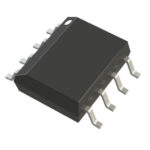 ADUM1281BRZ-RL7

The activity of extra discounts on wholesale prices is in full swing…
Please fill in your contact information and we will send you the latest wholesale price list.





