 ChipApex | Global Electronic Components Supplier

SEARCH
Search Product
Search Post
— IC芯片 | 连接器 | 传感器 | 被动器件 —
Search productSearch post
— IC芯片 | 连接器 | 传感器 | 被动器件 —
Consult the customer manager about the wholesale price.
consultation hotline:86-132-6715-2157
email:[email protected]
Contact the product manager for consultation. One-stop consultation is available.
Do you want a lower wholesale price? Please send us your inquiry and we will reply immediately.
The ADUM1281BRZ is a dual-channel digital isolator from Analog Devices, utilizing iCoupler technology which integrates high-speed CMOS logic with monolithic air-core transformer coils. This component provides electrical isolation between circuits without requiring optical components. It operates within a supply voltage range of 3.0 V to 5.5 V and supports data rates up to 25 Mb/s. The device features a propagation delay of 23 ns typical and offers a common-mode transient immunity of 25 kV/µs. It is housed in an 8-SOIC package and functions across an industrial temperature range of -40°C to +125°C.
Verify the specific suffix 'BRZ' to confirm the RoHS-compliant tube packaging variant. Ensure the design accommodates the 8-SOIC footprint dimensions. Confirm that the required data rate does not exceed the 25 Mb/s specification. Check thermal management requirements for operation at the upper limit of the specified temperature range.
Select this component when bidirectional or higher speed isolation is not required, as it is unidirectional. Consider the ADUM1281 series if lower channel counts are sufficient. Evaluate the 3000 Vrms isolation barrier against system safety requirements. Compare power consumption figures against battery-operated constraints given the operating current specifications.
This part belongs to the ADUM1281 family of dual-channel digital isolators. The series leverages Analog Devices' proprietary iCoupler technology to replace traditional optocouplers. The BRZ suffix indicates a lead-free, halogen-free version packaged in tubes. The family is designed for general-purpose isolation tasks where size and reliability are critical.
Direct replacements include other variants within the ADUM1281 family, such as ADUM1281ARZ or ADUM1281CRZ, depending on the required performance grade. Verify pin compatibility and isolation voltage ratings before substituting with competitors' devices.
The device provides a minimum common-mode transient immunity of 25 kV/µs.
No, the channels are configured as unidirectional isolators.
The typical propagation delay is 23 ns.
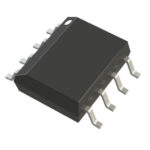 ADUM1281BRZ

The activity of extra discounts on wholesale prices is in full swing…
Please fill in your contact information and we will send you the latest wholesale price list.




