 ChipApex | Global Electronic Components Supplier

SEARCH
Search Product
Search Post
— IC芯片 | 连接器 | 传感器 | 被动器件 —
Search productSearch post
— IC芯片 | 连接器 | 传感器 | 被动器件 —
Consult the customer manager about the wholesale price.
consultation hotline:86-132-6715-2157
email:[email protected]
Contact the product manager for consultation. One-stop consultation is available.
Do you want a lower wholesale price? Please send us your inquiry and we will reply immediately.
The ADUM131E1BRWZ is a triple-channel digital isolator from Analog Devices, utilizing iCoupler magnetic coupling technology. It provides three channels with a 2:1 forward-to-reverse polarity configuration. The device supports data rates up to 150 Mb/s and offers an insulation voltage of 3750 Vrms. It operates within a supply voltage range of 1.8 V to 5 V and maintains a typical propagation delay of 7.2 ns. The component functions reliably across an extended temperature range from -40°C to +125°C and is housed in a 16-lead SOIC package.
Verify the specific suffix 'E1' to confirm the extended temperature grade and performance specifications. Ensure the SOIC-16 package width matches your PCB footprint requirements. Confirm that the 3750 Vrms insulation rating meets your safety standards. Check for RoHS compliance documentation if required by your manufacturing process. Validate the operating temperature range against your environmental conditions.
Select this component when high-speed data isolation is required alongside robust noise immunity. The 2:1 channel configuration suits applications needing more forward than reverse communication paths. Consider the 150 Mb/s rate for bandwidth-intensive signals. The wide supply voltage range allows compatibility with various logic levels. Ensure the thermal management strategy supports the specified operating temperature limits.
This part belongs to the ADuM131 series of triple-channel digital isolators. It shares the core iCoupler architecture with other variants in the family but differs in speed and temperature ratings. The series is designed for applications requiring multiple isolated channels in a compact form factor. It complements lower-speed or dual-channel options within the broader isolation product line.
The ADUM131D1BRWZ is a confirmed substitute with similar functionality but may differ in temperature grade or specific electrical parameters. Verify channel count and isolation voltage before substitution. Ensure pinout compatibility remains identical to avoid PCB redesign.
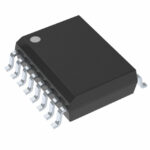 ADUM131E1BRWZ

The activity of extra discounts on wholesale prices is in full swing…
Please fill in your contact information and we will send you the latest wholesale price list.





