 ChipApex | Global Electronic Components Supplier
SEARCH
Search Product
Search Post
— IC芯片 | 连接器 | 传感器 | 被动器件 —
Search productSearch post
— IC芯片 | 连接器 | 传感器 | 被动器件 —
Consult the customer manager about the wholesale price.
consultation hotline:86-132-6715-2157
email:[email protected]
Contact the product manager for consultation. One-stop consultation is available.
Do you want a lower wholesale price? Please send us your inquiry and we will reply immediately.
The ADV7195KSZ is a multiformat progressive scan and HDTV encoder manufactured by Analog Devices Inc. It integrates three high-speed digital-to-analog converters (DACs) with TTL-compatible inputs on a single monolithic chip. The device accepts 10-bit YCrCb or RGB data in 4:2:2 or 4:4:4 formats, supporting standard resolutions including 525p, 625p, 1080i, and 720p. It operates with a single 3.3 V supply and features programmable sharpness filters, adaptive filter control, gamma correction, and an internal test pattern generator. The component is housed in a 52-lead MQFP package.
Verify the specific suffix KSZ against official documentation to confirm the temperature range and package option. Ensure that the ordering information matches the exact requirements for your application, as variations may exist within the product line. Cross-reference the manufacturer's latest datasheet for any updates on availability or specifications.
Select the ADV7195KSZ when designing systems requiring multiformat video encoding with integrated DACs. Consider its support for both progressive scan and HDTV modes, along with programmable filtering options. Evaluate the need for internal test patterns and gamma correction features. Confirm compatibility with the required input data formats and clock frequencies for your specific video application.
The ADV7195 is part of Analog Devices' video encoder family, designed for high-definition video processing. It serves as a bridge between digital video sources and analog display outputs. The device simplifies system design by integrating multiple functions typically requiring discrete components. Its robust feature set makes it suitable for professional video equipment and consumer electronics requiring high-quality video output.
Consult the manufacturer's documentation for direct replacements or pin-compatible alternatives. Verify functional equivalence regarding input formats, output standards, and power requirements before substitution.
The ADV7195 supports 10-bit YCrCb in 4:2:2 or 4:4:4 format, as well as RGB in 4:4:4 format.
Noise reduction on the I2C interface is controlled by the ALSB pin. Setting this pin high activates the I2C filter, reducing input bandwidth and rejecting pulses shorter than 50 ns.
Yes, the device can operate at 27 MHz for Progressive Scan Mode or 74.25 MHz/74.1758 MHz for HDTV Mode. It also supports 81 MHz in Async Timing Mode with 1x interpolation.
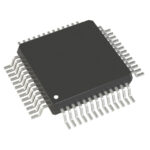 ADV7195KSZ
The activity of extra discounts on wholesale prices is in full swing…
Please fill in your contact information and we will send you the latest wholesale price list.





