 ChipApex | Global Electronic Components Supplier
SEARCH
Search Product
Search Post
— IC芯片 | 连接器 | 传感器 | 被动器件 —
Search productSearch post
— IC芯片 | 连接器 | 传感器 | 被动器件 —
Consult the customer manager about the wholesale price.
consultation hotline:86-132-6715-2157
email:[email protected]
Contact the product manager for consultation. One-stop consultation is available.
Do you want a lower wholesale price? Please send us your inquiry and we will reply immediately.
The AFS1500-1FG256K is a Fusion FPGA from Microchip Technology, featuring 1.5 million system gates and 38,400 configurable logic blocks (CLBs). It operates within a supply voltage range of 1.42 V to 1.58 V, with a nominal rating of 1.5 V. The device supports an industrial temperature range from -40°C to +85°C and utilizes a 256-ball FBGA package with a 1 mm pitch. This non-volatile flash-based architecture enables live at power-up functionality and in-system programming capabilities.
Verify the specific suffix 'K' against official Microchip documentation to confirm if it denotes a specific packaging variant or environmental compliance status, as standard datasheets may list the base model AFS1500-1FG256I. Confirm export control classifications such as ECCN 3A991D and moisture sensitivity level MSL 3 prior to ordering. Ensure compatibility with existing PCB footprints for the 256-LBGA package.
Select this component for designs requiring high-density programmable logic with built-in security features. The integrated voltage regulator simplifies power design by accepting a 3.3 V input. Consider the 1.5 V core voltage requirements for signal integrity and power budgeting. Verify that the 350 MHz system performance meets the timing constraints of the target application compared to higher-speed alternatives.
This part belongs to the Microchip Fusion family, which combines high-performance FPGA fabric with embedded memory and optional processor cores. The AFS1500 series represents the 1.5 million gate tier, offering a balance between logic density and power efficiency. It succeeds earlier Actel ProASIC and SmartFusion lines, maintaining compatibility with legacy development tools while providing enhanced security and performance metrics.
Direct substitutes include the AFS1500-1FG256I for industrial temperature variants. For lower density needs, the AFS600 series may be considered if pinout compatibility allows. Cross-family migration to SmartFusion2 requires significant architectural redesign due to different integration structures.
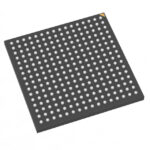 AFS1500-1FG256K
The activity of extra discounts on wholesale prices is in full swing…
Please fill in your contact information and we will send you the latest wholesale price list.





