 ChipApex | Global Electronic Components Supplier
SEARCH
Search Product
Search Post
— IC芯片 | 连接器 | 传感器 | 被动器件 —
Search productSearch post
— IC芯片 | 连接器 | 传感器 | 被动器件 —
Consult the customer manager about the wholesale price.
consultation hotline:86-132-6715-2157
email:[email protected]
Contact the product manager for consultation. One-stop consultation is available.
Do you want a lower wholesale price? Please send us your inquiry and we will reply immediately.
The AM29C10API is a microprogram sequencer manufactured by Advanced Micro Devices (AMD). It utilizes CMOS technology and features a 12-bit external data bus width. The device operates with a maximum clock frequency of 20 MHz and requires a 5 V power supply, with a maximum supply voltage of 5.5 V. It is housed in a 40-pin Plastic Dual In-line Package (PDIP-40). The component supports a commercial temperature range, operating between 0 °C and 70 °C, and has a maximum slew rate of 42 mA.
Verify the specific suffix 'PI' confirms the plastic DIP-40 package variant. Confirm RoHS compliance status as historical AMD CMOS parts may not meet current environmental standards. Validate pinout compatibility with existing PCB footprints for DIP-40 components. Ensure supply chain sources provide genuine AMD or authorized successor manufacturer parts to avoid counterfeit risks associated with legacy logic devices.
Select this component when a 12-bit microprogram sequencer is required within a CMOS bit-slice architecture. Compare against the AM29C10AJC if a surface-mount LCC-44 package is preferred instead of through-hole DIP. Ensure the design environment supports 5 V logic levels and that the 20 MHz speed requirement aligns with system timing constraints. Verify thermal dissipation capabilities for the plastic package within the 0–70 °C operating range.
The AM29C10 series belongs to AMD's family of microprogram sequencers designed for bit-slice processing applications. This specific part represents the CMOS version of the earlier TTL-based AM2910, offering lower power consumption while maintaining functional compatibility. The 'P' denotes the plastic DIP package, distinguishing it from ceramic or leadless chip carrier variants within the same logical family.
The AM29C10ADCB serves as a direct functional replacement using a ceramic DIP-40 package. Surface-mount designs may utilize the AM29C10AJC in an LCC-44 package. Verify pin-to-pin compatibility before substituting, as package differences do not alter internal logic but affect physical mounting requirements.
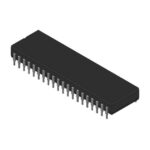 AM29C10API
The activity of extra discounts on wholesale prices is in full swing…
Please fill in your contact information and we will send you the latest wholesale price list.






