 ChipApex | Global Electronic Components Supplier
SEARCH
Search Product
Search Post
— IC芯片 | 连接器 | 传感器 | 被动器件 —
Search productSearch post
— IC芯片 | 连接器 | 传感器 | 被动器件 —
Consult the customer manager about the wholesale price.
consultation hotline:86-132-6715-2157
email:[email protected]
Contact the product manager for consultation. One-stop consultation is available.
Do you want a lower wholesale price? Please send us your inquiry and we will reply immediately.
The AM3359ZCZD72 is a microprocessor from the Texas Instruments Sitara AM335x series, built on an ARM Cortex-A8 core. It operates at a maximum clock frequency of 720 MHz and utilizes a 32-bit data bus width. The component is housed in a 324-pin PBGA package with surface mount installation. Internal memory structures include 32 kB L1 instruction cache, 32 kB L1 data cache, and 256 kB L2 cache. It supports I/O voltages of 1.8 V and 3.3 V, with a core operating voltage of 1.26 V. The device functions within a temperature range of -40°C to +105°C.
Verify the specific suffix against official documentation to confirm clock speed and package variations. Confirm RoHS compliance status and moisture sensitivity level requirements before integration. Ensure ESD protection protocols are followed during handling due to the fine-pitch BGA packaging. Cross-reference the datasheet revision date to ensure compatibility with current software BSPs.
Select this processor when high-performance graphical output and deterministic real-time communication are required simultaneously. The PRU-ICSS allows offloading time-critical tasks from the main ARM core. Consider the thermal dissipation characteristics of the PBGA package for enclosed industrial enclosures. Verify that the available GPIO count meets the interface requirements for sensors and actuators.
This component belongs to the Sitara AM335x family of microprocessors, which are optimized for applications demanding low power consumption alongside rich connectivity. The family integrates multiple peripheral controllers including Ethernet, USB, and CAN interfaces. It serves as a bridge between high-level operating systems and physical hardware in embedded environments.
AM3359BZCZA80
The Programmable Real-Time Unit and Industrial Communication Subsystem allows for independent operation and clocking separate from the ARM core, enabling support for real-time industrial protocols like EtherCAT and PROFINET.
Yes, the AM335x series is designed to support high-level operating systems including Linux, Android, and Windows CE.
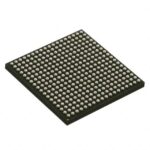 AM3359ZCZD72
The activity of extra discounts on wholesale prices is in full swing…
Please fill in your contact information and we will send you the latest wholesale price list.






