 ChipApex | Global Electronic Components Supplier
SEARCH
Search Product
Search Post
— IC芯片 | 连接器 | 传感器 | 被动器件 —
Search productSearch post
— IC芯片 | 连接器 | 传感器 | 被动器件 —
Consult the customer manager about the wholesale price.
consultation hotline:86-132-6715-2157
email:[email protected]
Contact the product manager for consultation. One-stop consultation is available.
Do you want a lower wholesale price? Please send us your inquiry and we will reply immediately.
The AM3892CCYG135 is a microprocessor from the Texas Instruments Sitara ARM series, featuring an ARM Cortex-A8 core. It operates at a maximum clock frequency of 1.2 GHz and utilizes a 32-bit data bus width. The device is housed in a PBGA-1031 package with SMD/SMT installation style. Memory specifications include 32 kB L1 instruction cache, 32 kB L1 data cache, 64 kB data RAM, 48 kB data ROM, and 256 kB L2 cache. It supports floating-point instructions and interfaces including Ethernet, I2C, SPI, PCIe, UART, and USB. Operating voltage ranges from 850 mV to 1.1 V, with I/O voltages of 1.5 V, 1.8 V, or 3.3 V. The component functions within a temperature range of 0°C to +95°C.
Verify the specific suffix '135' against the official datasheet to confirm manufacturing lot details and revision level. Ensure compatibility with required operating temperatures ranging from 0°C to +95°C. Confirm that the PBGA-1031 package dimensions align with the target PCB layout. Validate power supply requirements for the 850 mV to 1.1 V core voltage domain. Check humidity sensitivity handling procedures during assembly.
Select this component when a single-core ARM Cortex-A8 solution with integrated multimedia capabilities is required. Consider the 1.2 GHz processing speed for applications needing significant computational throughput. Evaluate the available interface options like PCIe and Ethernet for system connectivity needs. Assess the thermal performance within the specified 0°C to +95°C operational range. Verify that the PBGA-1031 package is suitable for the manufacturing process.
This part belongs to the Texas Instruments Sitara AM389x family of microprocessors. These devices are designed for demanding embedded applications requiring robust processing power and rich peripheral sets. The AM3892 variant specifically targets industrial and medical markets. It integrates a video codec engine alongside the CPU core. The family emphasizes low power consumption relative to performance levels.
Consult the official Texas Instruments product transition notices for qualified substitutes. Verify pin-to-pin compatibility if replacing existing designs. Review updated feature sets in newer generation Sitara processors. Ensure software migration paths are supported by the alternative components.
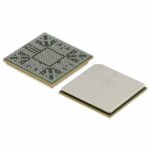 AM3892CCYG135
The activity of extra discounts on wholesale prices is in full swing…
Please fill in your contact information and we will send you the latest wholesale price list.






