 ChipApex | Global Electronic Components Supplier

SEARCH
Search Product
Search Post
— IC芯片 | 连接器 | 传感器 | 被动器件 —
Search productSearch post
— IC芯片 | 连接器 | 传感器 | 被动器件 —
Consult the customer manager about the wholesale price.
consultation hotline:86-132-6715-2157
email:[email protected]
Contact the product manager for consultation. One-stop consultation is available.
Do you want a lower wholesale price? Please send us your inquiry and we will reply immediately.
The AOB600A60L is a surface-mount N-channel power transistor from Alpha & Omega Semiconductor, utilizing aMOS5 technology. It features a drain-source voltage of 600V and a maximum junction-to-case thermal resistance of 1.3°C/W. The device supports a continuous drain current of 8A at 25°C case temperature and handles a pulsed drain current of 32A. Key electrical parameters include a maximum on-resistance of 0.6Ω at VGS=10V and a total gate charge of 11.5nC. It operates within a junction temperature range of -55°C to 150°C.
Verify the specific package type and ordering suffix when sourcing. Confirm that the component meets RoHS compliance standards as indicated by the Green product designation. Ensure the supplier provides valid datasheets matching revision 3.2 or later to guarantee accurate parameter alignment. Check for any specific handling requirements related to moisture sensitivity levels during storage and assembly.
Select this component for applications requiring a balance of voltage rating and low on-resistance in a compact surface-mount footprint. Consider the thermal resistance values when designing heatsinking solutions. Evaluate the gate charge requirements against the driving circuit capabilities to ensure optimal switching speeds. Compare the safe operating area curves with the intended load conditions to prevent device failure under transient loads.
This part belongs to the aMOS5 family of N-channel MOSFETs from Alpha & Omega Semiconductor. It shares similar electrical characteristics with the through-hole variants AOT600A60L and AOTF600A60L but differs in physical packaging. The TO-263 D2PAK package allows for higher power dissipation compared to smaller surface-mount options while maintaining compatibility with automated assembly processes.
Direct pin-compatible replacements within the same series include AOT600A60L and AOTF600A60L, though these utilize different packages (TO-220 and TO-220F respectively). Verify thermal management requirements when substituting between package types due to differences in junction-to-case thermal resistance.
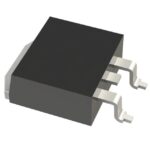 AOB600A60L

The activity of extra discounts on wholesale prices is in full swing…
Please fill in your contact information and we will send you the latest wholesale price list.





