 ChipApex | Global Electronic Components Supplier
SEARCH
Search Product
Search Post
— IC芯片 | 连接器 | 传感器 | 被动器件 —
Search productSearch post
— IC芯片 | 连接器 | 传感器 | 被动器件 —
Consult the customer manager about the wholesale price.
consultation hotline:86-132-6715-2157
email:[email protected]
Contact the product manager for consultation. One-stop consultation is available.
Do you want a lower wholesale price? Please send us your inquiry and we will reply immediately.
The AOZ5332QI is a high-efficiency synchronous buck power stage module integrating two asymmetrical MOSFETs and an internal driver. It supports a 2.5V to 25V input range with a 4.5V to 5.5V driver supply. The device delivers 50A continuous output current, up to 80A for 10ms pulses, and 120A for 10µs pulses. Operating frequencies reach 2MHz. It features 3V/5V PWM compatibility, Tri-State support, UVLO, and thermal warning via the THWN pin.
Verify the specific suffix 'QI' matches the required -40°C to +125°C ambient temperature rating and QFN5x5-31L package configuration. Confirm RoHS compliance requirements align with project specifications. Ensure ordering documentation references the correct datasheet revision Rev. 2.0 October 2018 for accurate electrical characteristics and timing parameters.
Select this component for applications requiring high current density in a compact footprint. The integrated driver eliminates external gate drive complexity. Verify that the PCB layout can accommodate the exposed pad thermal requirements for both High-Side and Low-Side MOSFETs. Ensure the controller supports the specified PWM voltage thresholds and Tri-State functionality for proper system integration.
This part belongs to the Alpha & Omega Semiconductor DrMOS family, designed specifically for high-performance synchronous buck conversion. It integrates power switches and drivers into a single low-profile package to minimize board space and parasitic inductance. The module targets demanding digital loads where efficiency and transient response are critical.
Public confirmed substitute part numbers are not available in the provided documentation.
The SMOD# pin must be pulled low to enable Discontinuous Mode of Operation (DCM), Diode Emulation, or Skip Mode.
The THWN pin is an open-drain output that pulls low when the junction temperature reaches the over-temperature threshold, serving as a thermal warning indicator.
Yes, the PWM input is Tri-State compatible. When the PWM signal is floating or in high impedance, the gate drivers turn off the MOSFETs.
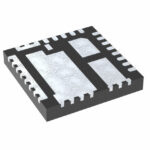 AOZ5332QI_1
The activity of extra discounts on wholesale prices is in full swing…
Please fill in your contact information and we will send you the latest wholesale price list.





