 ChipApex | Global Electronic Components Supplier
SEARCH
Search Product
Search Post
— IC芯片 | 连接器 | 传感器 | 被动器件 —
Search productSearch post
— IC芯片 | 连接器 | 传感器 | 被动器件 —
Consult the customer manager about the wholesale price.
consultation hotline:86-132-6715-2157
email:[email protected]
Contact the product manager for consultation. One-stop consultation is available.
Do you want a lower wholesale price? Please send us your inquiry and we will reply immediately.
The AP2331FJ-7 is a single-channel USB switch manufactured by Diodes Incorporated, designed for hot-swap applications. It integrates current limiting and high-side power switching capabilities within an SC-59 surface-mount package. The device operates with an input voltage range of 2.7 V to 5.2 V and features a typical on-resistance of 250 mΩ. Key electrical specifications include a precise current limit of 0.4 A and a controlled rise time with a typical soft-start duration of 0.7 ms. The component supports bidirectional data lines and provides comprehensive protection against over-current, short-circuit, and thermal events, ensuring system integrity during connection transients.
Verify the specific suffix 'FJ' corresponds to the SC-59 package configuration when sourcing. Confirm RoHS compliance and halogen-free status through official manufacturer documentation or authorized distributor certificates. Ensure the procurement channel is authorized to guarantee authenticity and traceability of the semiconductor components.
Select this component for USB ports requiring integrated protection against hot-plug transients and short circuits. The SC-59 package offers a compact footprint suitable for space-constrained portable devices. Consider the 0.4 A current limit and 250 mΩ on-resistance for load management requirements. Verify that the operating temperature range meets the environmental conditions of the target application.
The AP2331 belongs to a family of single-channel USB switches from Diodes Incorporated. These devices are engineered to protect downstream electronics from damage caused by hot-swapping peripherals. The series emphasizes reliability through built-in protections like soft-start and thermal regulation, making them suitable for consumer electronics and computing hardware interfaces.
Cross-reference with other AP2331 variants such as AP2331QG-7 (SOT-23) or AP2331UQ-7 (U-DFN2020-3) if package compatibility differs. Verify that substitute parts maintain identical pinouts, current limits, and protection thresholds to ensure functional equivalence without redesigning the PCB layout.
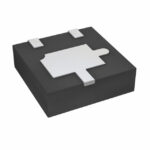 AP2331FJ-7
The activity of extra discounts on wholesale prices is in full swing…
Please fill in your contact information and we will send you the latest wholesale price list.





