 ChipApex | Global Electronic Components Supplier
SEARCH
Search Product
Search Post
— IC芯片 | 连接器 | 传感器 | 被动器件 —
Search productSearch post
— IC芯片 | 连接器 | 传感器 | 被动器件 —
Consult the customer manager about the wholesale price.
consultation hotline:86-132-6715-2157
email:[email protected]
Contact the product manager for consultation. One-stop consultation is available.
Do you want a lower wholesale price? Please send us your inquiry and we will reply immediately.
The Panasonic Electric Works APT1221 is a single-channel Triac output optocoupler designed for AC power control applications. It features a random phase turn-on characteristic, allowing triggering at any point in the AC cycle without zero-crossing circuitry. The device provides high isolation with a rated insulation voltage of 5000 Vrms and supports a maximum repetitive peak off-state voltage of 600 V. It delivers a maximum continuous output current of 100 mA RMS. Key electrical parameters include a forward current of 50 mA, a forward voltage of 1.21 V typical, and a maximum turn-on time of 100 µs. The component operates within a temperature range of -40°C to +100°C.
Verify the specific suffix (e.g., A, SZ, WAY) to confirm packaging type and pin configuration. Confirm RoHS compliance status and certification marks such as VDE or cURU against the latest datasheet revision. Check lead times as these components may be produced to order. Ensure the selected variant matches the required isolation voltage and output current ratings for the target application.
Select this component when random phase triggering is required rather than zero-crossing. Evaluate the 100 mA RMS output current limit against the load requirements. Consider the 5000 Vrms isolation rating for safety compliance. Compare alternative packages like surface-mount variants if space constraints exist. Verify thermal dissipation capabilities given the 500 mW power dissipation limit.
The APT1221 belongs to the APT series of phototriac couplers from Panasonic Electric Works. This series is widely used in industrial and consumer electronics for isolating low-voltage control signals from high-voltage AC loads. The family includes various packaging options and voltage ratings to suit different design needs.
APT1221A is a documented substitute part number within the same product line.
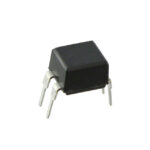 APT1221
The activity of extra discounts on wholesale prices is in full swing…
Please fill in your contact information and we will send you the latest wholesale price list.




