 ChipApex | Global Electronic Components Supplier
SEARCH
Search Product
Search Post
— IC芯片 | 连接器 | 传感器 | 被动器件 —
Search productSearch post
— IC芯片 | 连接器 | 传感器 | 被动器件 —
Consult the customer manager about the wholesale price.
consultation hotline:86-132-6715-2157
email:[email protected]
Contact the product manager for consultation. One-stop consultation is available.
Do you want a lower wholesale price? Please send us your inquiry and we will reply immediately.
The APT150GN120JDQ4 is a single IGBT module manufactured by Microchip Technology under the ISOTOP trademark. It utilizes Fieldstop technology and is housed in an SOT-227-4 package with screw mount installation. The device supports a maximum collector-emitter voltage (VCEO) of 1.2 kV and delivers a continuous collector current of 215 A at 25°C. Key electrical parameters include a collector-emitter saturation voltage of 1.7 V, a gate-emitter leakage current of 600 nA, and a maximum power dissipation of 625 W. The gate-emitter maximum voltage is rated at 30 V. The component operates within a temperature range of -55°C to +150°C.
Verify the specific ordering suffix JDQ4 against the manufacturer's official datasheet to confirm pinout compatibility and terminal configuration. Ensure that the SOT-227-4 mechanical dimensions match the target heatsink interface requirements. Confirm RoHS compliance status through the latest environmental declaration documents provided by Microchip Technology before finalizing procurement specifications.
Select this component when a single IGBT with 1.2 kV blocking capability and high current handling is required. The 1.7 V saturation voltage indicates moderate conduction losses, which should be evaluated against system efficiency targets. Consider the 625 W power dissipation rating alongside the thermal resistance characteristics of the SOT-227-4 package to determine adequate cooling solutions for the intended operating environment.
This part belongs to the Microchip Technology IGBT module portfolio, specifically utilizing Fieldstop technology. It is distinct from other variants such as the APT150GN60JDQ4, which features a lower 600 V rating. The ISOTOP series is characterized by its robust packaging designed for direct mounting on heat sinks, differentiating it from standard plastic encapsulated transistors or multi-chip modules.
Publicly confirmed substitute part numbers are not available in the provided documentation. Verify compatibility with any alternative components by cross-referencing the exact electrical ratings, package footprint, and thermal characteristics with the original design specifications.
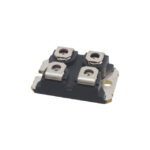 APT150GN120JDQ4
The activity of extra discounts on wholesale prices is in full swing…
Please fill in your contact information and we will send you the latest wholesale price list.





