 ChipApex | Global Electronic Components Supplier
SEARCH
Search Product
Search Post
— IC芯片 | 连接器 | 传感器 | 被动器件 —
Search productSearch post
— IC芯片 | 连接器 | 传感器 | 被动器件 —
Consult the customer manager about the wholesale price.
consultation hotline:86-132-6715-2157
email:[email protected]
Contact the product manager for consultation. One-stop consultation is available.
Do you want a lower wholesale price? Please send us your inquiry and we will reply immediately.
The AT17LV002A-10JC is a 2,097,152 x 1-bit serial configuration memory designed for Field Programmable Gate Arrays. It operates on a 3.3V (±10%) or 5.0V (±5% Commercial, ±10% Industrial) supply. The device supports In-System Programming via a 2-wire bus and features a simple interface to SRAM FPGAs. It is available in a 20-lead PLCC package with commercial temperature range operation from 0°C to 70°C.
Verify that the ordering suffix 'JC' corresponds to the 20-lead PLCC package and the Commercial temperature range (0°C to 70°C). Confirm the voltage variant matches the system requirements, as the 'LV' designation indicates low-voltage compatibility but the datasheet specifies distinct voltage tolerances for commercial and industrial grades. Ensure the application utilizes the 2-wire serial interface for ISP if field updates are required.
Select this component when a 2-Mbit capacity is required for single or cascaded FPGA configuration. It is suitable for designs requiring pin-compatible upgrades across the AT17A series family. Consider the industrial grade variant if operating temperatures extend below 0°C or above 70°C. Verify FPGA compatibility lists for specific device generations before finalizing the design.
This part belongs to the AT17A series of FPGA configuration EEPROMs, which provide cost-effective memory solutions for SRAM-based FPGAs. The series includes various densities ranging from 65-Kbit to 4-Mbit. The AT17LV002A specifically targets applications needing high-capacity configuration storage with low-power CMOS technology and simple serial access procedures.
AT17LV002A-10QC (32-lead TQFP package)
The user can program the polarity of the RESET/OE pin by writing four specific EEPROM bytes during the programming process.
The nCASC pin goes Low when the address counter reaches its maximum value, allowing it to drive the nCS input of the next configurator in a daisy-chain sequence.
No, the AT17LV002A does not support JTAG programming; it uses a 2-wire serial interface for in-system programming.
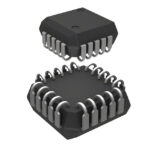 AT17LV002A-10JC
The activity of extra discounts on wholesale prices is in full swing…
Please fill in your contact information and we will send you the latest wholesale price list.




