 ChipApex | Global Electronic Components Supplier
SEARCH
Search Product
Search Post
— IC芯片 | 连接器 | 传感器 | 被动器件 —
Search productSearch post
— IC芯片 | 连接器 | 传感器 | 被动器件 —
Consult the customer manager about the wholesale price.
consultation hotline:86-132-6715-2157
email:[email protected]
Contact the product manager for consultation. One-stop consultation is available.
Do you want a lower wholesale price? Please send us your inquiry and we will reply immediately.
The AT17C002-10CI is a 2-megabit (2,097,152 x 1-bit) serial configuration EEPROM designed for programming Field Programmable Gate Arrays. It operates at a nominal 5V supply voltage and supports an industrial temperature range of -40°C to +85°C. The device utilizes a simple serial interface compatible with FPGA Master Serial Mode, allowing direct connection without external controllers. It features in-system programmability via a 2-wire bus and includes a system-friendly READY pin to indicate power-up completion.
Verify the specific package type required for the design, as the CI suffix denotes the Industrial temperature grade but does not specify the physical footprint. Confirm compatibility with existing FPGA master serial mode timing requirements. Ensure the design accounts for the 5V nominal supply voltage constraints defined in the absolute maximum ratings. Cross-reference the ordering code against current manufacturer documentation to confirm availability status.
Select this component when a non-volatile solution is required for FPGA configuration data storage. It serves as a drop-in replacement for legacy PROMs such as the XC17 or ATT17 series. Consider the cascading capability if the target FPGA requires more than 2 megabits of configuration data. Verify that the target FPGA supports the serial master mode protocol utilized by this configurator.
This part belongs to the AT17 Series of FPGA Configuration EEPROMs manufactured by Atmel, now Microchip Technology. The series provides cost-effective memory solutions for programming field programmable gate arrays. The AT17C002 variant specifically offers 2-megabit density, while the LV version supports lower voltage operation. The family is designed for seamless integration with various FPGA architectures from major manufacturers.
AT17LV002-10CI
The user can program the reset polarity to be either active low or active high by writing to four specific EEPROM bytes within the device.
The Chip Enable Output (CEO) goes low when the address counter reaches its maximum value, enabling the next configurator in a daisy-chain sequence.
Yes, the device supports In-System Programming (ISP) via a 2-wire serial bus when the SER_EN pin is driven low.
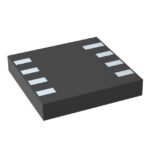 AT17C002-10CI
The activity of extra discounts on wholesale prices is in full swing…
Please fill in your contact information and we will send you the latest wholesale price list.





