 ChipApex | Global Electronic Components Supplier
SEARCH
Search Product
Search Post
— IC芯片 | 连接器 | 传感器 | 被动器件 —
Search productSearch post
— IC芯片 | 连接器 | 传感器 | 被动器件 —
Consult the customer manager about the wholesale price.
consultation hotline:86-132-6715-2157
email:[email protected]
Contact the product manager for consultation. One-stop consultation is available.
Do you want a lower wholesale price? Please send us your inquiry and we will reply immediately.
The ATF16V8CZ-12SC is a high-performance Electrically Erasable CMOS Programmable Logic Device (EEPLD) manufactured by Microchip Technology. It utilizes advanced Flash memory technology to provide reprogrammability with 100 erase/write cycles and 20-year data retention. The device features eight macrocells, each allocated eight product terms, supporting registered, complex, or simple logic configurations. Key electrical specifications include a maximum pin-to-pin propagation delay of 12 ns, a typical standby current of 5 µA, and operation over a commercial temperature range of 0°C to +70°C with a 5V ±5% supply voltage.
Verify package integrity upon receipt, as the SOIC-20 variant is sensitive to moisture. Confirm RoHS compliance status if required, noting that standard versions may differ from Green package options. Ensure programming equipment supports the specific Flash memory architecture and security fuse settings defined in the datasheet.
Select the -12 speed grade for applications requiring a maximum 12 ns propagation delay. Choose the SC suffix specifically for the 20-lead Small Outline Integrated Circuit (SOIC) package. Ensure the operating environment remains within the commercial temperature range of 0°C to +70°C; otherwise, an Industrial grade variant is necessary.
This component belongs to the ATF16V8CZ series, which represents the electrically erasable version of the ATF16V8C line. It serves as a superset architecture capable of emulating various 20-pin combinatorial and registered PLDs, offering greater flexibility than fixed-function logic devices while maintaining industry-standard pinouts.
The ATF16V8CZ-12JC (PLCC), ATF16V8CZ-12PC (PDIP), and ATF16V8CZ-12XC (TSSOP) are alternative package options within the same speed grade. For industrial temperature ranges (-40°C to +85°C), the ATF16V8CZ-15SI or ATF16V8CZ-15XI variants are suitable substitutes, provided power is derated by 30%.
The device features an edge-sensing power-down mode that reduces supply current to typically less than 5 µA when inputs and internal nodes are not switching.
Pin-keeper circuits hold pins at their previous logic value when undriven, eliminating the need for external pull-up resistors and preventing indeterminate logic states.
Yes, it can emulate many 20-pin PALs including 16R8, 16L8, 16H8, 10L8, and others through its configurable macrocell modes.
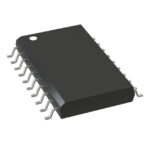 ATF16V8CZ-12SC
The activity of extra discounts on wholesale prices is in full swing…
Please fill in your contact information and we will send you the latest wholesale price list.





