 ChipApex | Global Electronic Components Supplier
SEARCH
Search Product
Search Post
— IC芯片 | 连接器 | 传感器 | 被动器件 —
Search productSearch post
— IC芯片 | 连接器 | 传感器 | 被动器件 —
Consult the customer manager about the wholesale price.
consultation hotline:86-132-6715-2157
email:[email protected]
Contact the product manager for consultation. One-stop consultation is available.
Do you want a lower wholesale price? Please send us your inquiry and we will reply immediately.
The ATF22LV10CQZ-30XU is an electrically erasable programmable logic device (EEPLD) manufactured by Microchip Technology. It features a high-performance CMOS architecture with 10 macrocells, providing 12 inputs and 10 I/Os in a 24-lead TSSOP package. The device operates within a supply voltage range of 3.0V to 5.5V and supports industrial temperature ranges from -40°C to +85°C. Key electrical specifications include a maximum propagation delay of 30ns for non-registered outputs and a typical standby current of 5µA enabled by Input Transition Detection circuitry.
Verify the ordering suffix 'XU' corresponds to the 24-lead TSSOP package and Industrial temperature range (-40°C to +85°C). Confirm RoHS compliance status as the datasheet indicates green package options are available. Ensure programming hardware supports the specific EEPLD interface requirements defined in the device documentation.
Select this component when a low-power, reprogrammable logic solution is needed for industrial environments. The CQZ variant offers lower high-frequency ICC compared to the CZ series. Consider the 30ns speed grade if higher frequency performance than the 25ns CZ part is not required but lower power is prioritized. Verify that the TSSOP footprint matches the PCB design constraints.
This part belongs to the ATF22LV10CQZ family, which serves as the low-voltage successor to the obsolete ATF22LV10CZ. The 'CQZ' designation specifically denotes the inclusion of Input Transition Detection for zero-power standby modes. The 'XU' suffix identifies the surface-mount TSSOP package configuration within the industrial temperature grade lineup.
The ATF22LV10CZ series is obsolete and replaced by the ATF22LV10CQZ series. When replacing older CZ parts, verify that the system can accommodate the specific timing characteristics and power-down behavior introduced by the CQZ Input Transition Detection circuitry.
The device utilizes Atmel's patented Input Transition Detection (ITD) circuitry. When the inputs are idle, the ITD circuit automatically powers down the device to a zero-power mode, while pin keeper circuits maintain the previous logic states on the pins.
Programming the security fuse prevents unauthorized copying of the programmed fuse patterns. Once set, fuse verify and preload functions are inhibited, although the 64-bit User Signature remains accessible.
No. Unused product terms are automatically disabled by the compiler to decrease power consumption. Only the utilized terms contribute to dynamic power usage during operation.
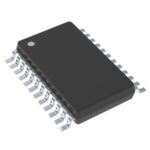 ATF22LV10CQZ-30XU
The activity of extra discounts on wholesale prices is in full swing…
Please fill in your contact information and we will send you the latest wholesale price list.







