 ChipApex | Global Electronic Components Supplier
SEARCH
Search Product
Search Post
— IC芯片 | 连接器 | 传感器 | 被动器件 —
Search productSearch post
— IC芯片 | 连接器 | 传感器 | 被动器件 —
Consult the customer manager about the wholesale price.
consultation hotline:86-132-6715-2157
email:[email protected]
Contact the product manager for consultation. One-stop consultation is available.
Do you want a lower wholesale price? Please send us your inquiry and we will reply immediately.
The ATF22V10BQ-15JC is a high-performance Electrically Erasable Programmable Logic Device (EEPLD) utilizing Atmel Flash memory technology. It features 10 macrocells, 22 inputs, and 10 I/O lines in a 24-pin PLCC package. The device operates at a maximum propagation delay of 15 ns with a typical standby supply current of 35 mA. It supports a 5V power supply within ±10% tolerance and functions across the full military temperature range of -55°C to +125°C.
Verify that the specific ordering suffix matches the required package type and environmental rating. The datasheet indicates that commercial and industrial grade leaded part offerings have been removed from recent revisions; ensure the component meets the necessary military or industrial specifications for the intended application environment.
Select this model for applications requiring reprogrammability without UV erasure. The BQ speed grade offers lower power consumption compared to standard B grades but maintains a 15 ns max propagation delay. Ensure the system design accommodates the 5V ±10% supply voltage requirement for military/industrial operation.
This component belongs to the ATF22V10B family of high-performance EEPLDs. It shares the same architectural core as other variants like the ATF22V10B-15GM but differs in package configuration and specific electrical characteristics defined by the ordering code suffixes.
Direct pin-compatible replacements within the same family include ATF22V10B-15GM/883 for ceramic DIP packages or ATF22V10C series devices if speed and power requirements align. Verify package compatibility when substituting surface mount options.
Registers reset to the low state slightly after VCC crosses the reset voltage (VRST). The clock must remain stable during the recovery time (tPR) before driving the clock pin high.
Programming the security fuse prevents unauthorized copying of the device's fuse patterns by inhibiting fuse verify and preload operations, though the 64-bit User Signature remains accessible.
Yes, the registers allow loading with either a high or low state to simplify testing and control test sequencing via a JEDEC file generated during compilation.
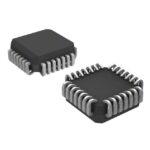 ATF22V10BQ-15JC
The activity of extra discounts on wholesale prices is in full swing…
Please fill in your contact information and we will send you the latest wholesale price list.





