 ChipApex | Global Electronic Components Supplier
SEARCH
Search Product
Search Post
— IC芯片 | 连接器 | 传感器 | 被动器件 —
Search productSearch post
— IC芯片 | 连接器 | 传感器 | 被动器件 —
Consult the customer manager about the wholesale price.
consultation hotline:86-132-6715-2157
email:[email protected]
Contact the product manager for consultation. One-stop consultation is available.
Do you want a lower wholesale price? Please send us your inquiry and we will reply immediately.
The ATF22V10C-7SC is a high-performance CMOS electronically erasable programmable logic device (EEPLD) manufactured by Microchip Technology. It features 10 macrocells and 10 I/O pins in a 24-pin SOIC package. The device provides a maximum pin-to-pin propagation delay of 7.5 ns, supporting a maximum operating frequency of 125 MHz. It operates on a 5V supply with a typical standby power consumption of 10µA. The component utilizes advanced Flash technology for reprogrammability and includes pin-controlled power-down capabilities.
Verify the specific package suffix 'SC' against official ordering tables, as standard documentation lists 'SX' for the 24-lead Plastic Gull Wing Small Outline (SOIC) package. Confirm RoHS compliance status and temperature range requirements prior to procurement. Ensure programming tools support the JEDEC file format generated for this device architecture.
Select this part for applications requiring fast combinatorial logic with low standby power. The 7.5 ns delay suits moderate-speed digital designs. Consider the -7 speed grade if system timing allows for slower commercial-grade devices to reduce costs. Verify that the 24-pin SOIC footprint matches the PCB layout constraints.
This component belongs to the ATF22V10C family of EEPLDs. It shares architectural similarities with the ATF22V10B series but offers electrically erasable Flash memory instead of EEPROM. The device is designed to replace older GAL and PAL logic components in existing designs while providing non-volatile reprogrammability.
ATF22V10C-7PX: PDIP-24 package variant with identical electrical specifications.
When the PD pin is driven high, the device enters power-down mode, reducing supply current to less than 100µA. Output data and internal logic states are latched and held during this period.
The pin-keeper circuits hold inputs and I/O pins at their previous logic state when not actively driven, preventing floating pins and reducing system power consumption.
Yes, programming and erasing are performed using standard PLD programmers that support the JEDEC file format generated by compatible design software.
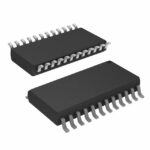 ATF22V10C-7SC
The activity of extra discounts on wholesale prices is in full swing…
Please fill in your contact information and we will send you the latest wholesale price list.





