 ChipApex | Global Electronic Components Supplier

SEARCH
Search Product
Search Post
Search productSearch post
Consult the customer manager about the wholesale price.
consultation hotline:86-132-6715-2157
email:[email protected]
Contact the product manager for consultation. One-stop consultation is available.
Do you want a lower wholesale price? Please send us your inquiry and we will reply immediately.
ATMEGA16-16PI is listed in the Microcontrollers range at ChipApex. The manufacturer field lists Microchip Technology. Its product description is IC MCU 8BIT 16KB FLASH 40DIP. Review the specifications below when checking this part for your BOM.
The ATMEGA16-16PI is an 8-bit AVR microcontroller featuring a 40-pin PDIP package. It includes 16 Kbytes of In-System Programmable Flash, 512 Bytes EEPROM, and 1 Kbyte Internal SRAM. The device supports speeds up to 16 MHz with an operating voltage range of 4.5V to 5.5V. It provides 32 programmable I/O lines and integrates peripherals such as two 8-bit timers, one 16-bit timer, an 8-channel 10-bit ADC, USART, SPI, and a JTAG interface.
Verify the specific ordering code matches the required speed grade and package type. Confirm that the 4.5V minimum supply voltage aligns with system power rails. Ensure design compatibility with the 40-pin PDIP footprint and industrial temperature range specifications before finalizing procurement.
Select this component when a 40-pin through-hole package is required for high-speed 16 MHz operation. It is suitable for designs needing robust non-volatile memory endurance and extensive I/O connectivity. Consider alternative packages if surface-mount technology or lower voltage operation is necessary.
This part belongs to the ATmega16 family of 8-bit microcontrollers based on the AVR enhanced RISC architecture. It offers a balance of processing performance and peripheral integration within a standard DIP form factor, targeting cost-sensitive embedded applications requiring reliable in-system programming capabilities.
ATMEGA16-16PU
The maximum clock frequency is 16 MHz.
No, differential channels are only available in the TQFP package variant.
Explore related parts through Embedded, Integrated Circuits (ICs), all product categories, ChipApex homepage.
Microchip Technology ATMEGA16-16PI is typically reviewed in Microcontrollers category in embedded designs where boot behavior, debug access, and peripheral assumptions have to remain stable across layout and firmware revisions. Key specs include Description (IC MCU 8BIT 16KB FLASH 40DIP), Core (AVR), Speed (16MHz), Flash (16KB (8K x 16)), and RAM (1K x 8). The strongest approval record usually starts with i/o (32) and then checks whether those limits still hold after assembly.
Who is the manufacturer of ATMEGA16-16PI?
Microchip Technology
What is the packaging of ATMEGA16-16PI?
Tube
What is the package/case of ATMEGA16-16PI?
40-DIP (0.600", 15.24mm)
What Program Memory Type does ATMEGA16-16PI have?
FLASH
In the Microcontrollers category, Microchip Technology ATMEGA16-16PI is usually evaluated by whether it holds the same electrical, thermal, and mechanical assumptions once the part is on the assembled system. In production, the early application review usually stays on core (AVR), speed (16MHz), and flash (16KB (8K x 16)). In real deployments, microcontrollers are usually released only after boot straps, reset timing, debug access, and power-domain behavior are checked on assembled hardware, because many field faults begin as recovery problems rather than obvious functional misses. In real deployments, selection is driven by compute headroom, peripheral mix, toolchain maturity, lifecycle availability, and secure boot/update strategy. They commonly sit at the center of sensor fusion, protocol processing, or deterministic control loops where latency and reliability matter. This is often what separates a prototype that works from a product that stays reliable in the field.
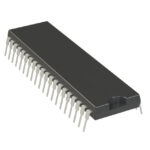 ATMEGA16-16PI

The activity of extra discounts on wholesale prices is in full swing…
Please fill in your contact information and we will send you the latest wholesale price list.







