 ChipApex | Global Electronic Components Supplier

SEARCH
Search Product
Search Post
Search productSearch post
Consult the customer manager about the wholesale price.
consultation hotline:86-132-6715-2157
email:[email protected]
Contact the product manager for consultation. One-stop consultation is available.
Do you want a lower wholesale price? Please send us your inquiry and we will reply immediately.
ATMEGA1608-AUR is listed in the Microcontrollers range at ChipApex. The manufacturer field lists Microchip Technology. Its product description is IC MCU 8BIT 16KB FLASH 32TQFP. Review the specifications below when checking this part for your BOM.
The ATmega1608-AUR is an 8-bit microcontroller from the megaAVR 0-series, featuring a 20 MHz AVR processor with hardware multiplier. It includes 16 KB of in-system self-programmable Flash memory, 2 KB of SRAM, and 256 bytes of EEPROM. The device operates within a voltage range of 1.8V to 5.5V and supports industrial temperature ranges (-40°C to +85°C). It utilizes a 32-pin TQFP package and offers up to 27 programmable I/O lines.
Verify the specific ordering suffix against the manufacturer's datasheet to confirm package type, temperature grade, and carrier format. Ensure the selected variant matches the required operating voltage and frequency specifications for the target application environment.
Select this component for designs requiring high performance at low power consumption within the megaAVR ecosystem. Consider the 20 MHz maximum frequency and extensive peripheral set when evaluating system requirements. Verify compatibility with existing development tools supporting the UPDI interface.
This part belongs to the megaAVR 0-series, designed for applications needing efficient code execution and flexible connectivity. The series emphasizes ease of use through vertical migration capabilities and advanced power management features like SleepWalking.
ATmega1608-SSU
The ATmega1608 can operate at a maximum frequency of 20 MHz.
Yes, devices in the megaAVR 0-series are fully pin and feature compatible, allowing for vertical migration without code modification.
The ATmega1608 uses a single-pin Unified Program Debug Interface (UPDI) activated by a dedicated pin.
Explore related parts through Embedded, Integrated Circuits (ICs), all product categories, ChipApex homepage.
Microchip Technology ATMEGA1608-AUR is usually screened in Microcontrollers category when power sequencing, recovery behavior, and I/O planning need a released validation path instead of ad hoc bring-up fixes. Key specs include Description (IC MCU 8BIT 16KB FLASH 32TQFP), Core (AVR), Speed (20MHz), Flash (16KB (16K x 8)), and RAM (2K x 8). In practice, the release review usually stays anchored on i/o (27).
What details help you quote ATMEGA1608-AUR quickly?
Provide the part number (ATMEGA1608-AUR), quantity, required lead time, and any packaging or documentation requirements.
Who is the manufacturer of ATMEGA1608-AUR?
Microchip Technology
Which core processor is used in ATMEGA1608-AUR?
AVR
What is the program memory size of ATMEGA1608-AUR?
16KB (16K x 8)
Microchip Technology ATMEGA1608-AUR is usually reviewed in Microcontrollers designs after the team defines which released constraint would be most expensive to rediscover after build, such as contact stability, source settling, shielding, thermal rise, or service access. On released hardware, teams usually recheck core (AVR), speed (20MHz), and flash (16KB (16K x 8)) first. Selection is driven by compute headroom, peripheral mix, toolchain maturity, lifecycle availability, and secure boot/update strategy. They commonly sit at the center of sensor fusion, protocol processing, or deterministic control loops where latency and reliability matter. In field equipment, deterministic processing and audit logging support regulated workflows and long-term maintainability. Compute control paths are usually judged by boot sequencing, debug access, and domain interaction because many field failures begin as recoverability problems rather than as outright functional failures.
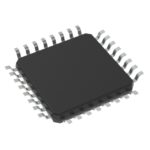 ATMEGA1608-AUR

The activity of extra discounts on wholesale prices is in full swing…
Please fill in your contact information and we will send you the latest wholesale price list.





