 ChipApex | Global Electronic Components Supplier
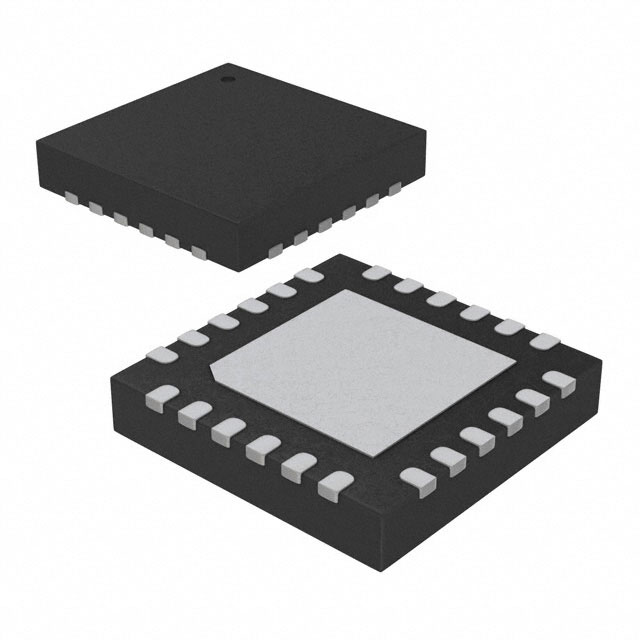
ATTINY1617-MNR
Search Product
Search Post
— IC芯片 | 连接器 | 传感器 | 被动器件 —
Search productSearch post
— IC芯片 | 连接器 | 传感器 | 被动器件 —
Consult the customer manager about the wholesale price.
consultation hotline:86-132-6715-2157
email:[email protected]
Contact the product manager for consultation. One-stop consultation is available.
Do you want a lower wholesale price? Please send us your inquiry and we will reply immediately.
The ATtiny1617-MNR is an 8-bit AVR microcontroller from the tinyAVR 1-series, featuring a 20 MHz CPU with hardware multiplier. It includes 16 KB Flash, 2 KB SRAM, and 256 B EEPROM. The device operates at 1.8V to 5.5V and supports up to 22 I/O lines in a 24-pin VQFN package. Key peripherals include two 10-bit ADCs, three 8-bit DACs, one USART, SPI, TWI, and a Peripheral Touch Controller (PTC).
Verify the specific suffix 'MNR' against official Microchip documentation to confirm tape-and-reel packaging and temperature grade. Ensure compatibility with existing design constraints regarding the 24-pin VQFN footprint and UPDI programming requirements before finalizing procurement.
Select this component when a balance of memory capacity and I/O count is required in a compact form factor. The inclusion of PTC makes it suitable for touch-sensitive applications without external controllers. Consider the 20 MHz speed and CIP capabilities for performance-critical tasks that benefit from reduced CPU load.
This part belongs to the ATtiny1614/1616/1617 family within the tinyAVR 1-series. It shares architectural similarities with the ATtiny817 but offers increased flash memory. The series emphasizes low power consumption and advanced analog features while maintaining code compatibility across pin-compatible variants.
Pin-compatible alternatives within the same family include ATtiny1614 and ATtiny1616, though they differ in package options and I/O counts. Verify software compatibility and peripheral availability when substituting.
The Peripheral Touch Controller supports capacitive touch buttons, sliders, wheels, and 2D surfaces, including wake-up on touch events.
Programming and debugging are performed via a single-pin Unified Program and Debug Interface (UPDI).
 ATTINY1617-MNR
The activity of extra discounts on wholesale prices is in full swing…
Please fill in your contact information and we will send you the latest wholesale price list.