 ChipApex | Global Electronic Components Supplier

SEARCH
Search Product
Search Post
— IC芯片 | 连接器 | 传感器 | 被动器件 —
Search productSearch post
— IC芯片 | 连接器 | 传感器 | 被动器件 —
Consult the customer manager about the wholesale price.
consultation hotline:86-132-6715-2157
email:[email protected]
Contact the product manager for consultation. One-stop consultation is available.
Do you want a lower wholesale price? Please send us your inquiry and we will reply immediately.
The AVR128DA64S-E/PT is an 8-bit microcontroller from the AVR DA(S) family, featuring a 24 MHz AVR CPU with hardware multiplier. It includes 128 KB of Flash memory, 16 KB of SRAM, and 512 B of EEPROM. The device operates within a supply voltage range of 1.8 V to 5.5 V and supports an extended temperature range of -40°C to +125°C. It provides up to 55 programmable I/O pins in a TQFP-64 package. Key peripherals include a 12-bit ADC, three analog comparators, three zero-cross detectors, and a Peripheral Touch Controller.
Verify that the ordering suffix 'S' confirms the inclusion of the PDID security feature. Ensure the '-E' suffix matches the required extended temperature operating range of -40°C to +125°C. Confirm the '/PT' designation corresponds to the TQFP-64 surface-mount package. Cross-reference the datasheet revision DS40002183E for accurate electrical specifications.
Select this component when enhanced security features are mandatory for the application. The PDID function prevents external reprogramming once activated. Choose this model over non-S variants if firmware integrity protection is required. Verify that the 55 available I/O pins meet the interface requirements for the target design.
This device belongs to the AVR128DA28/32/48/64(S) series, which offers vertical migration compatibility without code modification. The 'S' variant specifically integrates the Program and Debug Interface Disable feature. It shares architectural similarities with other AVR DA family members but distinguishes itself through its specific security configuration and pin count.
AVR128DA64-I/PT
The 'S' suffix indicates that the device includes the Program and Debug Interface Disable (PDID) feature, which protects the Flash memory from unauthorized modifications via the UPDI interface.
Once PDID is activated, the UPDI cannot erase or reprogram the Flash memory. Updates must be performed using software stored in the Boot Code section, which can verify the authenticity of new application code.
The internal high-frequency oscillator (OSCHF) can be selected to run the CPU at frequencies up to 24 MHz.
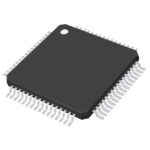 AVR128DA64S-E/PT

The activity of extra discounts on wholesale prices is in full swing…
Please fill in your contact information and we will send you the latest wholesale price list.





