 ChipApex | Global Electronic Components Supplier

SEARCH
Search Product
Search Post
— IC芯片 | 连接器 | 传感器 | 被动器件 —
Search productSearch post
— IC芯片 | 连接器 | 传感器 | 被动器件 —
Consult the customer manager about the wholesale price.
consultation hotline:86-132-6715-2157
email:[email protected]
Contact the product manager for consultation. One-stop consultation is available.
Do you want a lower wholesale price? Please send us your inquiry and we will reply immediately.
The BAV199T-7-F is a surface mount low leakage diode manufactured by Diodes Incorporated. It features an ultra-small SOT-523 package and contains two series-connected silicon signal diodes. The device supports a peak repetitive reverse voltage of 85 V and a continuous forward current of 125 mA for the double diode configuration. Power dissipation is rated at 150 mW, with a maximum operating temperature range from -65°C to +150°C. Electrical characteristics include a maximum reverse leakage current of 5 nA at 75 V and a total capacitance of 2 pF.
Verify component authenticity through authorized Diodes Incorporated distributors or direct channels. Confirm datasheet revision DS30258 Rev. 12-2 matches procurement specifications. Ensure packaging details align with tape and reel requirements. Check for RoHS compliance and green molding compound status based on date codes. Validate ordering information against official manufacturer documentation before finalizing purchase orders.
Select this component for designs requiring minimal reverse leakage and compact footprint. The SOT-523 case reduces board space compared to larger packages. Consider the 150 mW power dissipation limit when determining thermal management needs. Verify that the 85 V reverse voltage rating meets circuit requirements. Ensure compatibility with automated assembly processes utilizing standard SMT equipment.
This part belongs to a family including BAS116T, BAW156T, and BAV170T, all sharing the SOT-523 package. These devices are designed for general-purpose switching and low-leakage applications. The BAV199T variant specifically offers higher reverse voltage capabilities compared to some siblings. All variants maintain similar mechanical dimensions and mounting characteristics for interchangeability in specific layout constraints.
BAV199T-7-F serves as a direct replacement for other BAV199T variants within the same package. Cross-reference with BAS116T or BAW156T only if electrical parameters like leakage and voltage ratings are compatible. Verify pinout and marking codes match existing board silkscreen. Ensure thermal resistance and power dissipation limits remain within acceptable bounds for the application.
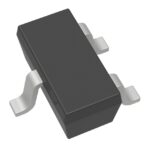 BAV199T-7-F

The activity of extra discounts on wholesale prices is in full swing…
Please fill in your contact information and we will send you the latest wholesale price list.





