 ChipApex | Global Electronic Components Supplier
SEARCH
Search Product
Search Post
— IC芯片 | 连接器 | 传感器 | 被动器件 —
Search productSearch post
— IC芯片 | 连接器 | 传感器 | 被动器件 —
Consult the customer manager about the wholesale price.
consultation hotline:86-132-6715-2157
email:[email protected]
Contact the product manager for consultation. One-stop consultation is available.
Do you want a lower wholesale price? Please send us your inquiry and we will reply immediately.
The BC848CW is a general-purpose NPN silicon epitaxial planar transistor manufactured by Taiwan Semiconductor Corporation. It is designed for low-voltage, low-power amplifier applications within the BC848 series. The device features a collector-emitter voltage rating of 30V and a continuous collector current capacity of 100mA. It utilizes an SOT-23 surface-mount package to facilitate automated assembly processes. The component operates across a junction temperature range from -55°C to +150°C, ensuring reliability in various electronic circuits.
Verify the manufacturer designation on the datasheet to confirm Taiwan Semiconductor Corporation as the source. Ensure the ordering part number matches the specific suffix required for the desired tape and reel configuration. Cross-reference the RoHS compliance status with the latest environmental declaration provided by the manufacturer before finalizing procurement specifications.
Select this component when a standard NPN small-signal transistor with 30V breakdown and 100mA current capability is required. The SOT-23 package offers space efficiency for compact designs. Consider the DC current gain (hFE) binning requirements for specific amplifier linearity needs. Evaluate thermal dissipation constraints relative to the 200mW power rating in the intended application environment.
This device belongs to the BC848 family of general-purpose transistors, which includes complementary PNP variants such as the BC858. These components are widely utilized in consumer electronics and industrial control systems due to their standardized pinout and reliable performance characteristics. The BC848CW specifically denotes the NPN variant within this established product line.
Compatible substitutes include the BC848C from other manufacturers such as Diodes Incorporated or Nexperia, provided the pinout and electrical ratings align. Verify that alternative sources offer equivalent hFE grading and package dimensions to ensure mechanical compatibility without redesigning the PCB footprint.
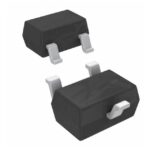 BC848CW
The activity of extra discounts on wholesale prices is in full swing…
Please fill in your contact information and we will send you the latest wholesale price list.





