 ChipApex | Global Electronic Components Supplier
SEARCH
Search Product
Search Post
— IC芯片 | 连接器 | 传感器 | 被动器件 —
Search productSearch post
— IC芯片 | 连接器 | 传感器 | 被动器件 —
Consult the customer manager about the wholesale price.
consultation hotline:86-132-6715-2157
email:[email protected]
Contact the product manager for consultation. One-stop consultation is available.
Do you want a lower wholesale price? Please send us your inquiry and we will reply immediately.
The BCR16CM-12LAJ6#B00 is a standard triac manufactured by Renesas Electronics Corporation, designed for medium power applications. It features a non-insulated planar construction with a maximum on-state RMS current of 16 A and a repetitive peak off-state voltage of 600 V. The device utilizes a TO-220FL package for through-hole mounting. Key gate characteristics include a maximum DC gate trigger current of 30 mA and a maximum DC gate trigger voltage of 1.5 V. The component supports an operating junction temperature range from -40°C to 150°C and offers high commutation capabilities suitable for general-purpose AC control tasks.
Verify the specific suffix J6 against official Renesas documentation to confirm exact manufacturing lot or revision details. Confirm availability status as distribution channels may list obsolete or limited stock items. Ensure the TO-220FL package dimensions match the target PCB footprint requirements before finalizing procurement decisions.
Select this component when a 16 A non-insulated triac with 600 V blocking voltage is required. Compare gate trigger currents against driver capabilities to ensure proper triggering. Consider thermal management solutions given the 150°C maximum junction temperature rating and the specific thermal resistance characteristics of the TO-220FL package for the intended load.
This part belongs to the BCR16 series of triacs from Renesas, which are engineered for medium power switching applications. The series typically includes variants with different voltage ratings and packaging options. The BCR16CM-12LAJ6#B00 specifically denotes the 600 V, 16 A configuration within this family, sharing common structural features with other members like the BCR16PM series.
Direct replacements must match the 16 A current, 600 V voltage, and TO-220FL package. Verify equivalent gate trigger specifications and thermal performance. Cross-reference with other Renesas BCR16 variants or industry-standard equivalents that meet the same electrical and mechanical constraints.
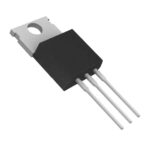 BCR16CM-12LAJ6#B00
The activity of extra discounts on wholesale prices is in full swing…
Please fill in your contact information and we will send you the latest wholesale price list.





