ChipApex | Global Electronic Components Supplier
SEARCH
Search Product
Search Post
— IC芯片 | 连接器 | 传感器 | 被动器件 —
Search productSearch post
— IC芯片 | 连接器 | 传感器 | 被动器件 —
Consult the customer manager about the wholesale price.
consultation hotline:86-132-6715-2157
email:[email protected]
Contact the product manager for consultation. One-stop consultation is available.
Do you want a lower wholesale price? Please send us your inquiry and we will reply immediately.
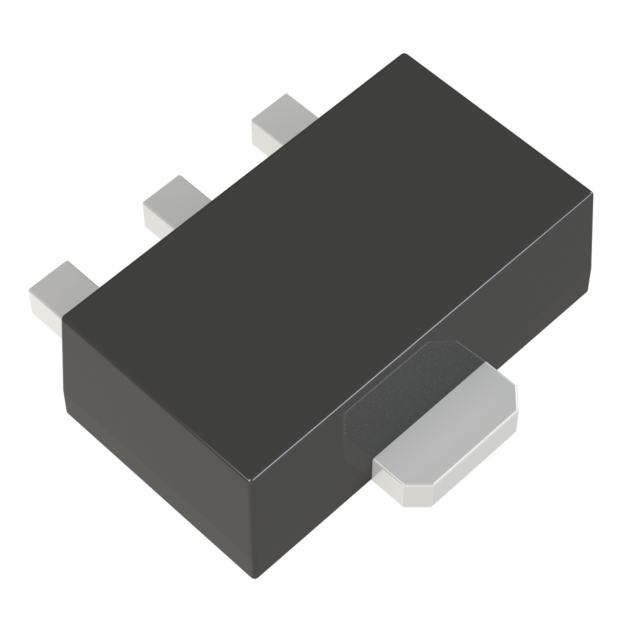
BCX5516H6327XTSA1 is an NPN silicon audio frequency transistor from the BCX54...-BCX56... series. It features a collector-emitter voltage of 60 V, collector-base voltage of 60 V, and emitter-base voltage of 5 V. The device supports a maximum continuous collector current of 1 A with peak currents up to 1.5 A. Total power dissipation reaches 2 W at a case temperature of 120°C or lower. Junction temperature tolerance extends to 150°C. Transition frequency is typically 100 MHz. DC current gain ranges from 25 to 250 depending on operating conditions.
Verify the exact part number against official Infineon documentation before procurement. Confirm that the suffix H6327XTSA1 corresponds to the specified SOT89 tape-and-reel packaging format. Ensure compliance with RoHS requirements and check for any specific automotive qualification certificates required by your supply chain. Cross-reference datasheet revision dates to ensure technical accuracy.
Select this component when a 60 V NPN transistor with 1 A current handling is required for audio applications. Compare its saturation voltage and transition frequency against alternatives like BCX54 or BCX56 variants based on specific circuit voltage and bandwidth needs. Consider thermal resistance characteristics for heat dissipation planning in compact designs requiring SOT89 surface-mount packaging.
This component belongs to the BCX54...-BCX56... family of NPN silicon AF transistors manufactured by Infineon Technologies. The series includes complementary PNP types such as BCX51...BCX53. These devices are designed for robust performance in audio circuits, offering standardized pin configurations across the family to facilitate design flexibility and component substitution within similar voltage and current ratings.
BCX55H6327XTSA1 serves as a direct functional substitute within the same package and electrical specifications. Other family members like BCX54 or BCX56 may be considered if voltage ratings align with specific application requirements, though their breakdown voltages differ.
 BCX5516H6327XTSA1
The activity of extra discounts on wholesale prices is in full swing…
Please fill in your contact information and we will send you the latest wholesale price list.