 ChipApex | Global Electronic Components Supplier
SEARCH
Search Product
Search Post
— IC芯片 | 连接器 | 传感器 | 被动器件 —
Search productSearch post
— IC芯片 | 连接器 | 传感器 | 被动器件 —
Consult the customer manager about the wholesale price.
consultation hotline:86-132-6715-2157
email:[email protected]
Contact the product manager for consultation. One-stop consultation is available.
Do you want a lower wholesale price? Please send us your inquiry and we will reply immediately.
The BCY58-IX TIN/LEAD is an NPN silicon single bipolar junction transistor (BJT) manufactured by Central Semiconductor Corp. It utilizes a TO-18-3 metal can package for through-hole mounting. Key electrical ratings include a collector-emitter voltage (VCEO) of 32 V, a collector-base voltage (VCBO) of 32 V, and an emitter-base voltage (VEBO) of 7 V. The device supports a continuous collector current of 100 mA with a maximum power dissipation of 340 mW. It features a transition frequency (fT) of 150 MHz, a minimum DC current gain (hFE) of 40 at 10 uA and 5 V, and a maximum hFE of 460 at 2 mA and 5 V. The collector-emitter saturation voltage is specified at 350 mV.
Verify the specific suffix designation when ordering, as it indicates the lead finish and binning classification. Confirm RoHS compliance status directly with the manufacturer or authorized distributors, as historical data may vary. Ensure the TO-18-3 pinout matches the target PCB footprint before integration. Request the latest datasheet to validate thermal resistance parameters for heat sinking requirements.
Select this component when a ruggedized metal-can NPN transistor is required for high-temperature reliability. The 32 V rating suits low-voltage logic and analog interfaces. Compare the 150 MHz transition frequency against application bandwidth needs. Consider the TO-18 package constraints regarding board space and thermal management compared to plastic alternatives like TO-92.
This part belongs to the BCY58 series of NPN silicon transistors produced by Central Semiconductor. The series offers complementary PNP types, such as the BCY79, for push-pull configurations. The BCY58-IX variant specifically denotes a particular gain bin and lead finish within the broader product family, ensuring consistency for manufacturing batches requiring specific hFE characteristics.
Direct substitutes include other NPN transistors in the TO-18 package with similar voltage and current ratings, such as the 2N3904 if package adaptation is acceptable. Verify that replacement devices meet the 150 MHz fT requirement and operate within the -65°C to +200°C temperature range. Check pin compatibility to avoid circuit modification.
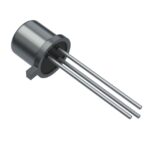 BCY58-IX TIN/LEAD
The activity of extra discounts on wholesale prices is in full swing…
Please fill in your contact information and we will send you the latest wholesale price list.





