 ChipApex | Global Electronic Components Supplier
SEARCH
Search Product
Search Post
— IC芯片 | 连接器 | 传感器 | 被动器件 —
Search productSearch post
— IC芯片 | 连接器 | 传感器 | 被动器件 —
Consult the customer manager about the wholesale price.
consultation hotline:86-132-6715-2157
email:[email protected]
Contact the product manager for consultation. One-stop consultation is available.
Do you want a lower wholesale price? Please send us your inquiry and we will reply immediately.
The BD18351EFV-ME2 is a single-channel boost LED driver IC designed for automotive lighting applications. It features an integrated switching DC/DC controller and high-side current detection for precise regulation. The device supports PWM dimming via a built-in signal generation circuit with a CRTIMER, eliminating the need for external microcontrollers in specific use cases. It operates within a supply voltage range of 4.5 V to 65 V and delivers a maximum output voltage of 65 V. The switching frequency extends up to 0.7 MHz. The component is qualified under AEC-Q100 standards and functions reliably across an operating temperature range from -40°C to +125°C.
Verify that the specific suffix ME2 matches the required tape and reel packaging configuration for automated assembly processes. Confirm that the AEC-Q100 Grade qualification aligns with the functional safety requirements of the target automotive application. Ensure the HTSSOP-B24 package dimensions are compatible with the designated PCB footprint and thermal management strategy.
Select this component when a single-channel boost architecture is required for automotive exterior lighting. The integrated PWM generator simplifies design by removing the need for MCU-based dimming signals in DRL applications. Consider the high-side detection method for improved accuracy in varying load conditions. Evaluate the 0.7 MHz maximum frequency against EMI constraints and external component sizing requirements.
This part belongs to the BD1835x series of automotive LED drivers manufactured by ROHM Semiconductor. It is positioned as a solution for high-reliability vehicle lighting systems requiring compact integration. The device complements other series members like the BD18353MUF-ME2, differing primarily in package type and specific feature sets such as the built-in PWM timer.
The datasheet lists BD18351EFV-M as a related part number alias. Verify pinout compatibility and electrical parameter equivalence before substituting. No other direct cross-model replacements are explicitly documented in the provided source material.
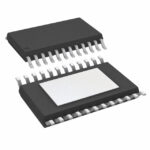 BD18351EFV-ME2
The activity of extra discounts on wholesale prices is in full swing…
Please fill in your contact information and we will send you the latest wholesale price list.





