 ChipApex | Global Electronic Components Supplier
SEARCH
Search Product
Search Post
— IC芯片 | 连接器 | 传感器 | 被动器件 —
Search productSearch post
— IC芯片 | 连接器 | 传感器 | 被动器件 —
Consult the customer manager about the wholesale price.
consultation hotline:86-132-6715-2157
email:[email protected]
Contact the product manager for consultation. One-stop consultation is available.
Do you want a lower wholesale price? Please send us your inquiry and we will reply immediately.
The BD5469GUL-E2 is a monaural Class-D speaker amplifier manufactured by ROHM Semiconductor. It operates on a single power supply ranging from 2.5 V to 5.5 V and delivers up to 900 mW of output power. The device features an integrated Automatic Level Control (ALC) function with a release time of 262 ms/dB to reduce clipping noise. It utilizes analog differential input and provides a fixed gain of 13 dB. The unit consumes 3 mA during operation and supports shutdown modes with minimal standby current. It is housed in a compact VCSP50L1-9 package suitable for surface mount applications.
Verify the specific suffix E2 against the manufacturer's latest documentation to confirm compliance with current environmental standards and pinout configurations. Ensure that the selected package variant matches the intended PCB footprint requirements. Cross-reference the part number with official ROHM databases to validate availability status and any potential design-in restrictions or obsolescence notices before finalizing procurement plans.
Select this component when designing systems requiring automatic level control to prevent audio clipping and protect connected speakers. It is appropriate for applications where space is limited due to its wafer-level CSP packaging. Consider the 13 dB fixed gain and 2.5 V to 5.5 V operating range to ensure compatibility with the system's power supply and signal input levels. Verify thermal management needs based on the expected output power and ambient temperature conditions.
This component belongs to the BD546xGUL series of low-voltage monaural Class-D speaker amplifiers developed by ROHM Semiconductor. Unlike the BD5460/61GUL variants which lack ALC functionality, the BD5469GUL integrates digital automatic level control. It shares pin compatibility with other members of the family, allowing for flexible design choices regarding gain settings and control features within mobile audio applications.
The BD5460GUL-E2 serves as a pin-compatible alternative within the same series but lacks the integrated Automatic Level Control function. Designers should verify if the absence of ALC impacts the specific application requirements regarding output limiting and speaker protection before substituting.
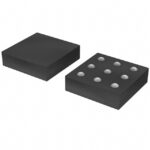 BD5469GUL-E2
The activity of extra discounts on wholesale prices is in full swing…
Please fill in your contact information and we will send you the latest wholesale price list.





