 ChipApex | Global Electronic Components Supplier
SEARCH
Search Product
Search Post
— IC芯片 | 连接器 | 传感器 | 被动器件 —
Search productSearch post
— IC芯片 | 连接器 | 传感器 | 被动器件 —
Consult the customer manager about the wholesale price.
consultation hotline:86-132-6715-2157
email:[email protected]
Contact the product manager for consultation. One-stop consultation is available.
Do you want a lower wholesale price? Please send us your inquiry and we will reply immediately.
The BD81A24MUV-ME2 is a four-channel white LED driver IC designed for automotive applications, certified to AEC-Q100 standards. It integrates a buck-boost current mode DC/DC controller and four constant current drivers, each capable of delivering up to 120 mA. The device operates within an input voltage range of 4.5 V to 35 V and supports a maximum output voltage of 40 V. Switching frequencies are adjustable from 200 kHz to 2.2 MHz. It features PWM dimming with a ratio of 10,000:1 at 100 Hz. The component functions reliably across a temperature range of -40°C to +125°C and is housed in a VQFN-28 package.
Verify the complete part number including the suffix ME2 to ensure correct packaging and automotive qualification status. Confirm that the design utilizes the specified VQFN-28SV5050 footprint and thermal pad requirements. Ensure the application circuit adheres to the recommended switching frequency range and external component values defined in the official datasheet for optimal performance and stability.
Select this component when a single-chip solution is required for driving multiple high-brightness LEDs in automotive environments. It is suitable for designs needing wide input voltage tolerance and integrated power switching. Consider the thermal characteristics of the VQFN package and the need for external synchronization if operating near the upper frequency limit. Verify compatibility with system-level functional safety requirements due to its FS supportive classification.
This device belongs to ROHM Semiconductor's automotive-grade LED driver family, specifically engineered for high-reliability applications. It complements other members like the BD81A74MUV-ME2 by offering integrated buck-boost topology rather than simple boost or buck configurations. The series targets modern vehicle lighting architectures requiring compact form factors and robust electrical protection features.
The BD81A24MUV-M is listed as an alias for this part number. No other distinct substitute part numbers are confirmed in the provided documentation.
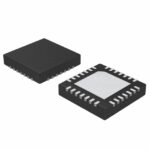 BD81A24MUV-ME2
The activity of extra discounts on wholesale prices is in full swing…
Please fill in your contact information and we will send you the latest wholesale price list.





