ChipApex | Global Electronic Components Supplier
SEARCH
Search Product
Search Post
— IC芯片 | 连接器 | 传感器 | 被动器件 —
Search productSearch post
— IC芯片 | 连接器 | 传感器 | 被动器件 —
Consult the customer manager about the wholesale price.
consultation hotline:86-132-6715-2157
email:[email protected]
Contact the product manager for consultation. One-stop consultation is available.
Do you want a lower wholesale price? Please send us your inquiry and we will reply immediately.
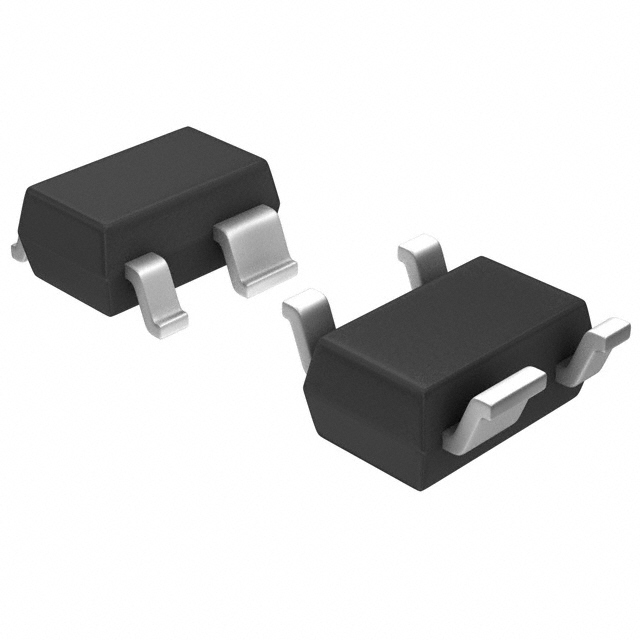
The BF888H6327XTSA1 is an NPN silicon RF bipolar power transistor manufactured by Infineon Technologies. It operates within a collector-emitter voltage (VCEO) of 4 V and supports a continuous collector current of 30 mA. The device features a minimum DC current gain (hFE) of 250 and a transition frequency of 47 GHz. Power dissipation is rated at 160 mW, with a typical noise figure ranging from 0.5 dB to 0.85 dB between 1.8 GHz and 6 GHz. It utilizes a PG-SOT343-4-2 surface-mount package and functions across a temperature range of -55°C to +150°C.
This component is officially classified as obsolete and no longer in production. Verification of availability should focus on remaining stock or secondary market sources rather than direct manufacturer orders. Buyers must confirm the specific revision and authenticity of available units due to the discontinuation status. Compliance documentation such as RoHS details should be reviewed against current regulatory requirements before integration into new designs.
Designers requiring this specific RF performance profile must evaluate alternative NPN transistors with comparable transition frequencies and noise figures. The SOT-343 footprint constraints may limit substitution options to similarly packaged devices. Electrical parameters such as VCEO and hFE should be matched closely to ensure circuit stability. Thermal management remains critical given the 160 mW dissipation rating in compact enclosures.
The BF888 series represents Infineon's portfolio of silicon RF bipolar transistors designed for high-frequency applications. This specific part number denotes the tape-and-reel packaging variant within the series. The component belongs to the broader category of discrete semiconductor devices used in radio frequency engineering. Its obsolescence reflects standard product lifecycle management practices common in the semiconductor industry.
Publicly confirmed substitute part numbers include BFP640H6327XTSA1 and BFP760H6327XTSA1. These alternatives are listed by distributors as existing stock items. Engineers should verify electrical compatibility and pinout alignment before implementing these replacements in existing hardware designs.
 BF888H6327XTSA1
The activity of extra discounts on wholesale prices is in full swing…
Please fill in your contact information and we will send you the latest wholesale price list.