 ChipApex | Global Electronic Components Supplier
SEARCH
Search Product
Search Post
— IC芯片 | 连接器 | 传感器 | 被动器件 —
Search productSearch post
— IC芯片 | 连接器 | 传感器 | 被动器件 —
Consult the customer manager about the wholesale price.
consultation hotline:86-132-6715-2157
email:[email protected]
Contact the product manager for consultation. One-stop consultation is available.
Do you want a lower wholesale price? Please send us your inquiry and we will reply immediately.
The BFR360FH6327XTSA1 is an NPN silicon RF bipolar transistor manufactured by Infineon Technologies. It operates with a maximum collector-emitter breakdown voltage of 9V and a transition frequency of 14GHz. The device supports a continuous collector current of 35mA and handles a maximum power dissipation of 210mW. DC current gain (hFE) is specified at a minimum of 90 under conditions of 15mA collector current and 3V Vce. Noise performance includes a typical noise figure of 1dB at 1.8GHz, with a gain of 15.5dB. It is housed in a PG-TSFP-3 surface-mount package, equivalent to SOT-723, and is rated for junction temperatures up to 150°C.
Verify component authenticity through official Infineon channels or authorized distributors. Confirm the specific suffix H6327XTSA1 matches required reel specifications. Check for end-of-life status as indicated in public records. Ensure RoHS compliance documentation aligns with project requirements. Validate package type PG-TSFP-3 compatibility with PCB footprint designs prior to ordering.
Select this component when designing circuits requiring high-frequency NPN amplification with low noise characteristics. The 9V breakdown voltage limits suitability for high-voltage applications. Consider the 35mA current limit for load driving capabilities. The TSFP-3 package requires appropriate thermal management strategies due to the 210mW power dissipation rating. Verify interface compatibility with existing system architectures before integration.
This part belongs to the BFR360 series of RF bipolar transistors from Infineon Technologies. It shares the core BFR360 architecture but utilizes the H6327XTSA1 suffix to denote specific packaging and tape-and-reel configuration. The PG-TSFP-3 package distinguishes it from other variants using different housing styles within the same functional family.
Public records list five potential substitute part numbers for this component. Verify electrical parameter equivalence and pinout compatibility before substitution. Cross-reference datasheets to ensure transition frequency and noise figures meet original design specifications.
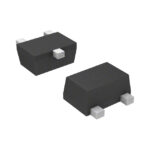 BFR360FH6327XTSA1
The activity of extra discounts on wholesale prices is in full swing…
Please fill in your contact information and we will send you the latest wholesale price list.





