 ChipApex | Global Electronic Components Supplier
SEARCH
Search Product
Search Post
— IC芯片 | 连接器 | 传感器 | 被动器件 —
Search productSearch post
— IC芯片 | 连接器 | 传感器 | 被动器件 —
Consult the customer manager about the wholesale price.
consultation hotline:86-132-6715-2157
email:[email protected]
Contact the product manager for consultation. One-stop consultation is available.
Do you want a lower wholesale price? Please send us your inquiry and we will reply immediately.
The BH7240AKV-E2 is an NTSC/PAL analog video encoder that converts parallel 8-bit digital RGB signals into six distinct video formats. It features a built-in high-speed DAC and supports composite, luminance, chrominance, and individual R, G, B outputs. The device operates on a single 5.0V supply with logic inputs ranging from 3.0V to 5.0V. Key electrical parameters include a maximum consumption current of 105 mA at DVDD=AVCC1=AVCC2=5.0V. The RGB data conversion frequency reaches up to 20 MHz, with setup and hold times of 20 nsec. It utilizes a VQFP48C package and functions within an operating temperature range of -20°C to +70°C.
Verify the specific ordering suffix E2 corresponds to the embossed tape and reel packaging format as defined in the datasheet. Confirm that the VQFP48C package dimensions and pinout match the target PCB footprint. Ensure the design accommodates the required external Y-trap filter components and bypass capacitors specified in the application circuit diagrams.
Select this component when digital RGB input is required rather than analog levels. Compare against the BH7236AF if analog RGB inputs are preferred, noting the difference in package type and input interface. Ensure the system clock can provide the necessary VCLK signal for the internal DAC sampling rate. Verify power supply stability to maintain the specified 5.0V operation for optimal video quality.
This part belongs to the BH72xx series of NTSC/PAL analog video encoders manufactured by ROHM Semiconductor. It is functionally related to the BH7236AF, which accepts analog RGB inputs instead of digital data. Both devices share similar output structures and driver capabilities but differ significantly in their input interfaces and physical packaging configurations.
The BH7236AF serves as a functional alternative for designs requiring analog RGB inputs instead of digital data. Note that the BH7236AF uses an SOP24 package, whereas the BH7240AKV uses a VQFP48C package. Pinouts and external component requirements differ between the two variants.
The RGB data conversion frequency is specified as a maximum of 20 MHz.
The format is selected via the NT/PAL input terminal; connecting it to a high level selects NTSC, while a low level selects PAL.
The YTRAP terminal connects an external LC filter to eliminate chrominance components from the luminance signal, thereby reducing cross-color artifacts in the composite video output.
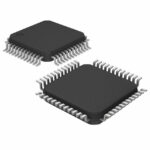 BH7240AKV-E2
The activity of extra discounts on wholesale prices is in full swing…
Please fill in your contact information and we will send you the latest wholesale price list.





