 ChipApex | Global Electronic Components Supplier
SEARCH
Search Product
Search Post
— IC芯片 | 连接器 | 传感器 | 被动器件 —
Search productSearch post
— IC芯片 | 连接器 | 传感器 | 被动器件 —
Consult the customer manager about the wholesale price.
consultation hotline:86-132-6715-2157
email:[email protected]
Contact the product manager for consultation. One-stop consultation is available.
Do you want a lower wholesale price? Please send us your inquiry and we will reply immediately.
The BQ2201SN-NG4 is a CMOS SRAM Nonvolatile Controller Unit manufactured by Texas Instruments. It converts standard CMOS SRAM into nonvolatile read/write memory for 3-volt battery-backup applications. The device monitors the 5V VCC input and forces the conditioned chip-enable output inactive to write-protect SRAM during out-of-tolerance conditions. It switches external SRAM from the VCC supply to one of two 3V backup supplies during power failure. Key electrical parameters include a chip-enable propagation delay of less than 10ns, a typical operating supply current of 3mA, and a data-retention mode current of 100nA maximum. The SN suffix indicates an 8-pin narrow SOIC package.
Verify that the SN suffix corresponds to the 8-pin narrow SOIC package configuration required for your PCB layout. Confirm the N suffix indicates the industrial temperature range of -40°C to +85°C. Ensure the THS pin connection matches your specific supply tolerance requirements, as this determines the power-fail detection threshold. Check for any obsolete status or lifecycle notices from Texas Instruments before finalizing procurement plans.
Select this component when designing systems that require seamless transition between 5V main power and 3V battery backup for SRAM retention. Consider the 8-pin narrow SOIC package constraints for space-limited designs. Evaluate the need for industrial temperature rating (-40°C to +85°C) versus commercial grade based on environmental conditions. Verify compatibility with standard CMOS SRAM timing specifications and voltage levels.
The bq2201 series serves as a dedicated controller for implementing nonvolatile memory solutions using standard CMOS SRAM chips. It eliminates the need for complex software-based backup routines by handling power monitoring and switching in hardware. The device is part of Texas Instruments' portfolio of memory support circuits designed to enhance system reliability and data integrity in embedded applications.
Check Texas Instruments documentation for direct replacements or updated versions of the bq2201 series. Verify pinout compatibility and electrical characteristics if substituting with other SRAM controllers. Ensure any alternative component supports the same 3V backup cell input architecture and provides equivalent write-protection functionality.
The device monitors the VCC input and forces the CECON output inactive when VCC falls below a selectable threshold (VPFD), which is determined by connecting the THS pin to either VSS for 5% operation or VCC for 10% operation.
BC1 and BC2 are inputs for two 3V primary backup cells. During power failure, VOUT is fed by BC1; if BC1 voltage drops below 2.5V, an internal switch automatically transfers VOUT to BC2 to maintain data retention.
Battery drain is prevented by applying an isolation signal on the CE pin during power-down. This requires CE to be brought to approximately half of VCC and held for at least 700ns while VCC crosses both VPFD and VSO thresholds.
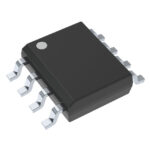 BQ2201SN-NG4
The activity of extra discounts on wholesale prices is in full swing…
Please fill in your contact information and we will send you the latest wholesale price list.





