ChipApex | Global Electronic Components Supplier
SEARCH
Search Product
Search Post
— IC芯片 | 连接器 | 传感器 | 被动器件 —
Search productSearch post
— IC芯片 | 连接器 | 传感器 | 被动器件 —
Consult the customer manager about the wholesale price.
consultation hotline:86-132-6715-2157
email:[email protected]
Contact the product manager for consultation. One-stop consultation is available.
Do you want a lower wholesale price? Please send us your inquiry and we will reply immediately.
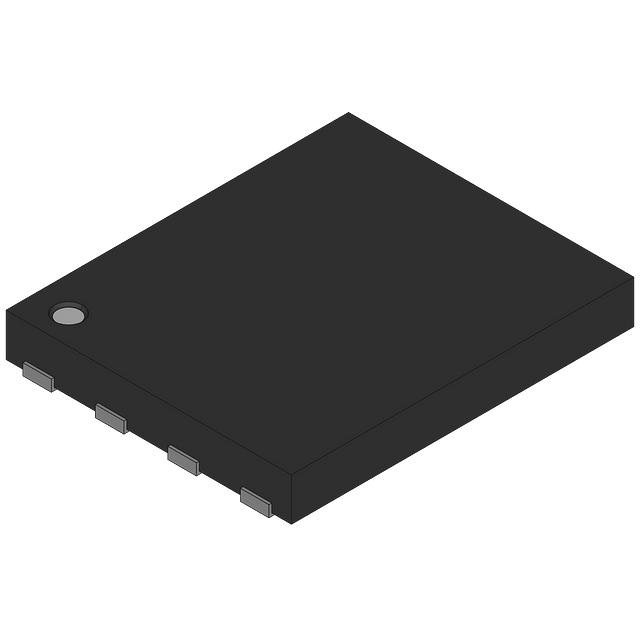
The BSC150N03LD G is a dual N-channel logic level MOSFET from the OptiMOS™3 family, housed in a PG-TDSON-8 package. It features a drain-source voltage of 30 V and a continuous drain current of 20 A at 25 °C case temperature. The maximum on-resistance is 15 mΩ at VGS=10 V and 22 mΩ at VGS=4.5 V. Total gate charge is typically 6.4 nC at VGS=10 V. Thermal resistance junction-to-case is 4.9 K/W via the bottom pad. Operating temperature ranges from -55 °C to +150 °C.
Verify the component marking '150N03LD' against the datasheet to confirm authenticity. Ensure the package matches the PG-TDSON-8 outline dimensions. Check for RoHS compliance and halogen-free status as specified in the product summary. Confirm that the supplier provides valid traceability documentation for the manufacturing lot.
Select this component when a compact dual MOSFET solution is required for low-voltage applications. The logic-level gate drive capability allows operation with standard control voltages. Consider the thermal resistance values for heat dissipation requirements in confined spaces. Evaluate the gate charge characteristics for switching frequency optimization in power conversion designs.
This device belongs to Infineon's OptiMOS™3 series, designed for high efficiency in power electronics. The dual configuration integrates two independent N-channel transistors within a single small footprint. This integration reduces board space compared to discrete single-channel alternatives while maintaining robust electrical performance for modern power supply architectures.
Direct replacements must match the PG-TDSON-8 package and dual N-channel topology. Verify that substitute parts meet or exceed the 30 V breakdown voltage and 20 A current rating. Ensure equivalent thermal resistance and gate charge specifications to maintain circuit performance without redesign.
The maximum continuous drain current is 20 A at a case temperature of 25 °C.
Yes, the device is qualified according to JEDEC standards for target applications.
The single pulse avalanche energy is rated at 80 mJ under conditions of ID=20 A and RGS=25 Ω.
 BSC150N03LD
The activity of extra discounts on wholesale prices is in full swing…
Please fill in your contact information and we will send you the latest wholesale price list.