 ChipApex | Global Electronic Components Supplier
SEARCH
Search Product
Search Post
— IC芯片 | 连接器 | 传感器 | 被动器件 —
Search productSearch post
— IC芯片 | 连接器 | 传感器 | 被动器件 —
Consult the customer manager about the wholesale price.
consultation hotline:86-132-6715-2157
email:[email protected]
Contact the product manager for consultation. One-stop consultation is available.
Do you want a lower wholesale price? Please send us your inquiry and we will reply immediately.
The BU1425AKV is a digital RGB/YUV to NTSC/PAL encoder manufactured by ROHM Semiconductor. It converts 24-bit RGB or 16-bit YUV input data into composite (VOUT), luminance (YOUT), and chrominance (COUT) analog signals. The device supports multiple clock frequencies including 27.0 MHz, 13.5 MHz, 28.636 MHz, 14.318 MHz, 28.375 MHz, 14.1875 MHz, 35.4695 MHz, and 17.73475 MHz. It features a 9-bit DAC for video output, an internal 8-color OSD generator, and operates on a single 5V supply with typical power consumption of 0.4W. The IC accommodates both master and slave synchronization modes.
Verify the specific suffix 'V' against the manufacturer's official documentation to confirm pinout compatibility and electrical characteristics relative to the standard BU1425AK. Ensure that the I/O voltage requirements match the target system design, particularly regarding the 3.3V interface option in Master mode.
Select this component when a dedicated NTSC/PAL encoder is required for multimedia applications. Consider the supported input clock frequencies and the need for internal OSD generation. Evaluate the power consumption constraints, specifically the reduced current draw when using the YCOFF function for systems requiring minimal energy usage during specific operational states.
The BU1425AKV belongs to the BU1425AK series of multimedia ICs designed for color signal encoding. This family of components focuses on converting digital video data into standard analog television signals. The series is engineered for integration into consumer electronics and multimedia playback devices requiring reliable video signal generation.
BU1425AK is the primary variant within the same series. Verify functional equivalence and pin compatibility before substitution.
The device supports 27.0/13.5MHz, 28.636/14.318MHz, 28.375/14.1875MHz, and 35.4695/17.73475MHz.
Setting the YCOFF pin to HIGH turns off the YOUT and COUT pins, reducing typical power consumption to 0.25W.
Yes, in Master mode, applying 3.3V to IOVDD allows HSY and VSY outputs with a 3.3V amplitude.
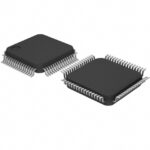 BU1425AKV
The activity of extra discounts on wholesale prices is in full swing…
Please fill in your contact information and we will send you the latest wholesale price list.






