 ChipApex | Global Electronic Components Supplier
SEARCH
Search Product
Search Post
— IC芯片 | 连接器 | 传感器 | 被动器件 —
Search productSearch post
— IC芯片 | 连接器 | 传感器 | 被动器件 —
Consult the customer manager about the wholesale price.
consultation hotline:86-132-6715-2157
email:[email protected]
Contact the product manager for consultation. One-stop consultation is available.
Do you want a lower wholesale price? Please send us your inquiry and we will reply immediately.
The BU21079F-E2 is a capacitive switch controller IC designed for operating switches with low power consumption via intermittent operation mode. It features an Analog Front End (AFE), A/D converter, MPU, and a 2-wire serial bus interface compatible with the I2C protocol. The device supports simple switches, matrix switches (up to 16 switches using 4x4 sensors), and sliders. It includes automatic self-calibration to handle external noise and temperature drift. Operating voltage ranges from 3.0V to 5.5V, with an operating current of 2.5mA (typical) and an operating temperature range of -25°C to 85°C.
Verify the component status before procurement, as the BU21079F-E2 may be listed as Not Recommended for New Designs (NRND). Confirm that the SOP-16 package dimensions and pinout match your PCB layout requirements. Ensure the host system supports the required 2-wire serial bus interface compatible with the I2C protocol for proper communication.
Select this IC when designing systems requiring capacitive sensing for up to eight sensor ports configured as simple switches or matrix keys. Consider the intermittent operation mode if power efficiency is critical. Verify that the host microcontroller can handle the slave address 0x5C and process the interrupt signals generated by the INT port during switch state changes.
The BU21079F-E2 belongs to ROHM Semiconductor's BU21079 series of capacitive switch controllers. It is part of a family of ICs designed to reduce host CPU load by integrating sensor data processing and application functions directly into the controller. This specific model utilizes an SOP-16 package and operates within a standard industrial temperature range.
Check for direct pin-compatible replacements within the BU21079 series or other ROHM capacitive switch controllers. Verify that any substitute maintains the same 8-channel capacity, I2C interface compatibility, and power supply requirements to ensure seamless integration without redesigning the host interface circuitry.
The IC activates automatic self-calibration when it detects external noise or temperature drift to maintain stable detection performance.
It supports simple switches, matrix switches (maximum 16 switches using 4x4 sensors), and slider inputs.
An interrupt signal is sent from the INT port to the host whenever a register is updated due to detected switch operations such as touch, release, or hold.
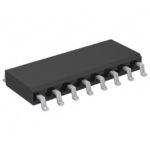 BU21079F-E2
The activity of extra discounts on wholesale prices is in full swing…
Please fill in your contact information and we will send you the latest wholesale price list.





