 ChipApex | Global Electronic Components Supplier
SEARCH
Search Product
Search Post
— IC芯片 | 连接器 | 传感器 | 被动器件 —
Search productSearch post
— IC芯片 | 连接器 | 传感器 | 被动器件 —
Consult the customer manager about the wholesale price.
consultation hotline:86-132-6715-2157
email:[email protected]
Contact the product manager for consultation. One-stop consultation is available.
Do you want a lower wholesale price? Please send us your inquiry and we will reply immediately.
The BU8788KN-E2 is a silicon monolithic integrated circuit designed as a sound generator for cellular phones. It features 32 polyphony with 128 sounds and a drum set of 47 sounds, incorporating ADPCM decode functions for mixing. The device operates within a power supply voltage range of 2.7V to 3.6V and supports an MCLK input frequency from 3.9MHz to 20MHz. Current consumption during playback is typically 1mA for analog circuits and 33mA for digital circuits at 3V. The component is housed in a VQFN-36 package and functions within an operating temperature range of -40°C to +85°C.
Verify the specific revision level against the latest ROHM documentation before implementation. Confirm that the VQFN-36 package dimensions align with the target PCB footprint. Ensure power supply decoupling capacitors are placed close to the AVDD and DVDD pins to maintain signal integrity. Check for any end-of-life notifications or discontinuation notices associated with this part number prior to finalizing procurement plans.
Select this component when designing portable communication devices requiring built-in polyphonic ringtones and drum patterns. The integrated ADPCM decoder simplifies audio data handling compared to external codec solutions. Ensure the host system can provide the required 3.9MHz to 20MHz master clock input. Verify that the single-supply voltage architecture matches the target device's power management design constraints.
This component belongs to ROHM Semiconductor's portfolio of audio ICs specifically engineered for mobile telecommunications. It serves as a dedicated sound source LSI rather than a general-purpose amplifier. The integration of MIDI and ADPCM decoding allows for complex musical arrangements within a compact form factor suitable for handheld electronic devices.
Consult official ROHM documentation for confirmed substitute part numbers. Verify pin compatibility and electrical characteristics if considering alternative sound generators. Ensure any replacement maintains the required 32-polyphony capability and ADPCM support.
The allowable dissipation is 450mW at 25°C ambient temperature. Above 25°C, the dissipation must be reduced by 4.5mW per 1°C increase.
The chip requires both DVDD (digital) and AVDD (analog) power supplies. These should be supplied with the same voltage level but routed on separate PCB patterns to suppress digital noise diffusion into the analog block.
At a 3V supply and 12.5MHz internal frequency, typical current consumption is 1mA for analog circuits and 33mA for digital circuits during playback.
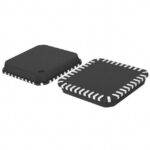 BU8788KN-E2
The activity of extra discounts on wholesale prices is in full swing…
Please fill in your contact information and we will send you the latest wholesale price list.







