 ChipApex | Global Electronic Components Supplier
SEARCH
Search Product
Search Post
— IC芯片 | 连接器 | 传感器 | 被动器件 —
Search productSearch post
— IC芯片 | 连接器 | 传感器 | 被动器件 —
Consult the customer manager about the wholesale price.
consultation hotline:86-132-6715-2157
email:[email protected]
Contact the product manager for consultation. One-stop consultation is available.
Do you want a lower wholesale price? Please send us your inquiry and we will reply immediately.
The BU91796BMUF-ME2 is an automotive-grade LCD segment driver manufactured by ROHM Semiconductor. It supports up to 80 segments with a 1/4 duty and 1/3 bias configuration. The device operates on a 2-wire serial interface (I2C) with a maximum clock frequency of 300 kHz. It functions within a supply voltage range of 2.5 V to 6 V, drawing a maximum power supply current of 30 uA. Power dissipation is rated at 700 mW. The component is housed in a VQFN-32-FBV050 package and meets AEC-Q100 Grade 2 standards for operation between -40°C and +105°C.
Verify the specific suffix ME2 against the official datasheet to confirm the package variant and tape-and-reel specifications. Confirm that the AEC-Q100 Grade 2 rating aligns with your target automotive application environment. Check for any functional safety support documentation if required for system-level safety analysis. Ensure compatibility with the 2-wire serial interface protocol used in the host design.
Select this component when designing automotive displays requiring high reliability and compact footprint. The VQFN-32-FBV050 package offers a small 5x5 mm form factor suitable for space-constrained PCB layouts. The integrated RAM simplifies firmware development by handling segment data storage internally. Verify that the 2.5 V to 6 V operating range matches the system power supply rails.
This part belongs to the BU91796 series of low-duty LCD segment drivers designed specifically for automotive applications. It shares core functionalities with variants like the BU91796MUF-ME2 but differs in package type and qualification grade. The series is characterized by low power consumption and robust performance under extreme temperature conditions typical of vehicle interiors.
The BU91796MUF-ME2 is listed as an alias or related variant in public records. However, it utilizes a different package (VQFN-32FV5050 vs VQFN-32-FBV050). Direct substitution requires verifying pinout compatibility and ensuring the alternative package meets the mechanical constraints of the existing board design.
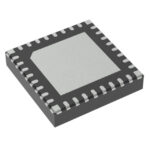 BU91796BMUF-ME2
The activity of extra discounts on wholesale prices is in full swing…
Please fill in your contact information and we will send you the latest wholesale price list.





